The Simplest Device That Does a Lot of Work
Engineering Notes — Bhanuka Gamachchige, NORVI Controllers
We built a smart plug with no output socket.
That sentence gets a weird look every time I say it out loud. A plug that doesn’t power anything. But once you see what it’s actually for, the missing socket stops being a bug and starts being the whole point.
The problem we were actually solving
There are hundreds — probably thousands, at this point — of Bluetooth sensors already sitting inside industrial facilities. Temperature probes, vibration sensors, door contacts, whatever a maintenance team bought two years ago because it was cheap and worked well enough over a few meters. The sensors are fine. The problem is always the same: that data never leaves the building. BLE has range, and the range runs out at the edge of the room.
So the actual ask isn’t “give us a better sensor.” It’s “get the sensor data we already have out to the cloud, without ripping out equipment that works.” That’s a bridge problem, not a sensor problem.
Why we stopped where we stopped
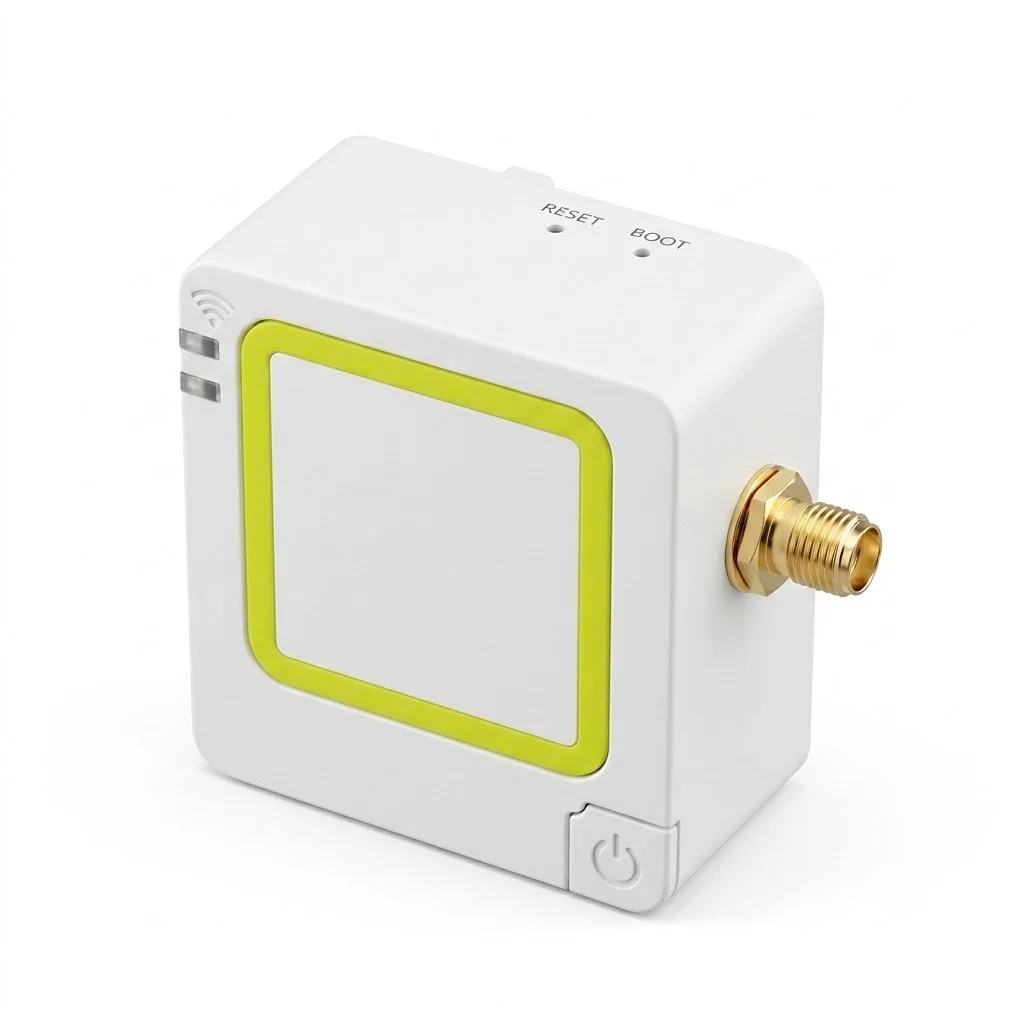
Once you frame it as a bridge, the hardware answer is almost boring: an ESP32 to receive the BLE broadcast, a cellular modem to send it on. That’s it. No display, no local logic beyond forwarding, no output socket to switch a load — because switching a load was never the job.
We deliberately didn’t go further than that. Not because we couldn’t — because every feature past “receive and forward” makes the device more expensive, and this device’s whole economic argument depends on being cheap. BLE’s short range means the honest fix for coverage is installing more bridges, not fewer, better ones. If one unit costs what a proper industrial gateway costs, nobody installs five of them to cover a plant floor. If it costs what a smart plug costs, they will.
That’s the restraint. It’s not a minimalism aesthetic. It’s a unit-economics decision disguised as a design decision — cheap enough to deploy densely is the actual feature.
The part that took longer than the electronics: it had to be a plug
Physically, it needed to live where the sensors already are — on a wall, near an outlet, not in a panel. So it inherited a plug’s form factor and plug’s install experience: someone pushes it into an outlet, it’s live. But it never needed to pass power through to anything, which is why “smart plug” is both the closest existing category and slightly the wrong name for it. We shipped it in the UK plug format first and built regional variants after, because the form factor question — which socket standard, which country — turned out to be more fiddly than the firmware.
The cellular bet underneath this
There’s a broader belief baked into this device: cellular is underused in IoT relative to what it’s actually good for. Everyone reaches for WiFi or LoRa first because they’re cheaper per unit and don’t carry a SIM cost. But WiFi means you’re dependent on facility infrastructure and IT approval, and LoRa means you’re building out your own gateway network. Cellular sidesteps both — the device is independent the moment it’s powered, which matters a lot when the buyer is a maintenance team, not an IT department. For a bridge whose whole job is “get data out of a building that already has working sensors,” not depending on that building’s network is the point.
Where this sits next to the power-budget argument
If you’ve read the Elektor piece, you’ve seen a related argument made from a different angle — that the best transmission is no transmission, i.e. minimize what you send to save power. That’s a power-budget argument. This is a product-scope argument: not what to send, but how much device to build in the first place. Same instinct — do less, deliberately — aimed at a different constraint. Worth reading both; they’re not the same essay wearing different clothes.
Related:
- Datasheet: norvi.io/docs/norvi-wg-eco-1-datasheet/
- Product page: norvi.io — Industrial Smart Plug with Cellular