
Borehole & Groundwater Level Monitoring with Cellular IoT
Monitor water levels remotely over the cellular network. Because it's battery-powered, there's no mains power and no wiring back to a control room. As a result, you get 2-3 years of battery life, SMS alerts, and a hardware platform built for system integrators.
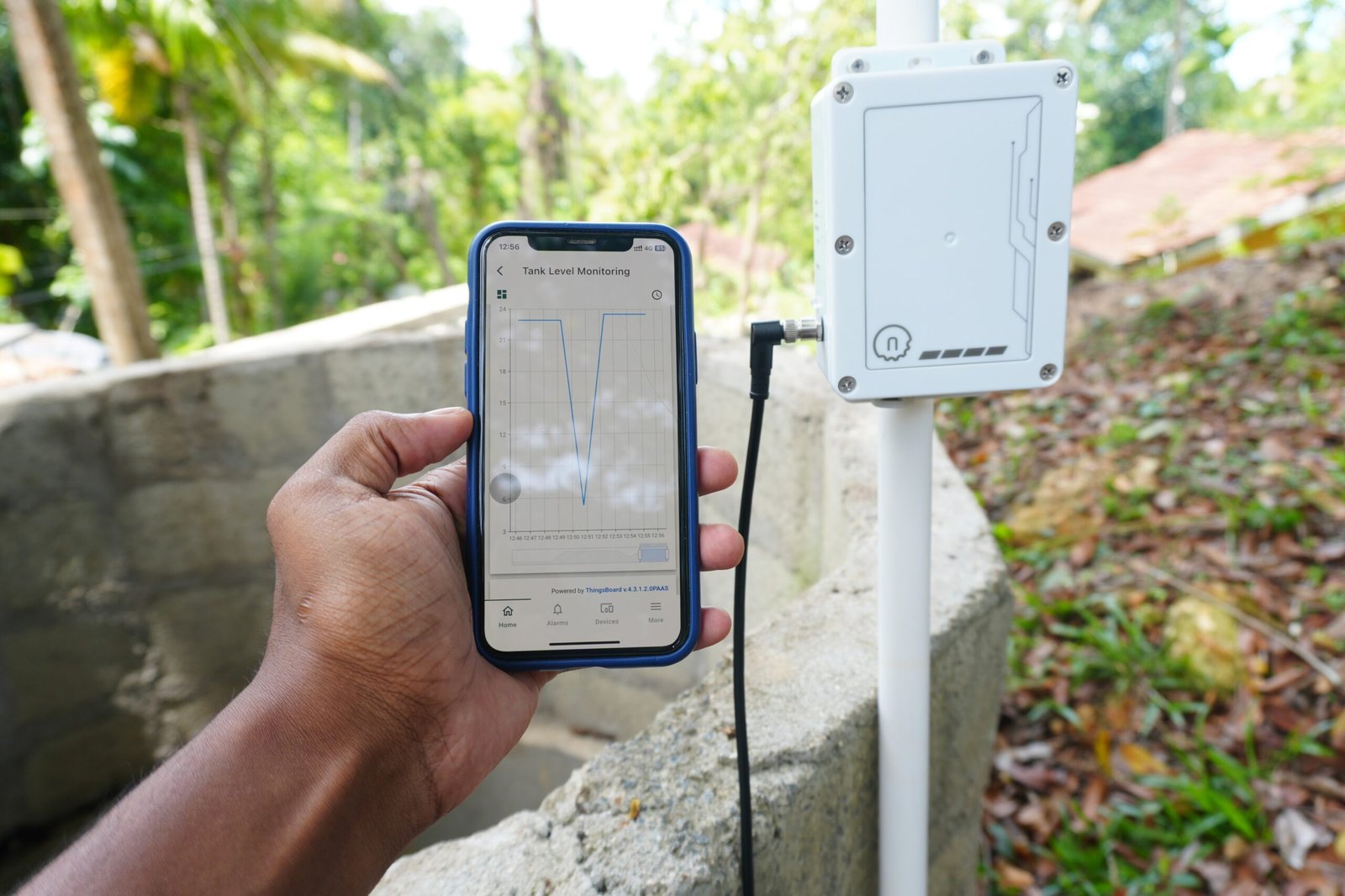
Remote boreholes have no power, no network, and no one standing next to them
A borehole is one of the hardest places to get data out of. Sites are often remote, tucked in a field, a pump house, or a wellfield spread across kilometres. On top of that, there's rarely mains power or a wired network. So the thing you most need to know, how the water level is behaving, is happening tens of metres underground, out of sight.
Most operators still answer that question with a manual dip meter: someone drives to the site, drops a tape, and writes down a number. Unfortunately, it's slow, infrequent, and tells you nothing between visits. As a result, by the time a level problem shows up on a clipboard, the pump may have been running dry for days.
Cellular borehole monitoring replaces that visit with a continuous feed. Instead, a pressure sensor in the water column, a battery-powered cellular logger at the wellhead, and a dashboard you open from anywhere do the work. There's no mains power and no wiring back to a control room, just groundwater level data, every few minutes, from a hole in the ground to your screen.
In short, this page explains how that system is built, what it costs to run, how long the battery really lasts, and how system integrators put it to work under their own platforms.
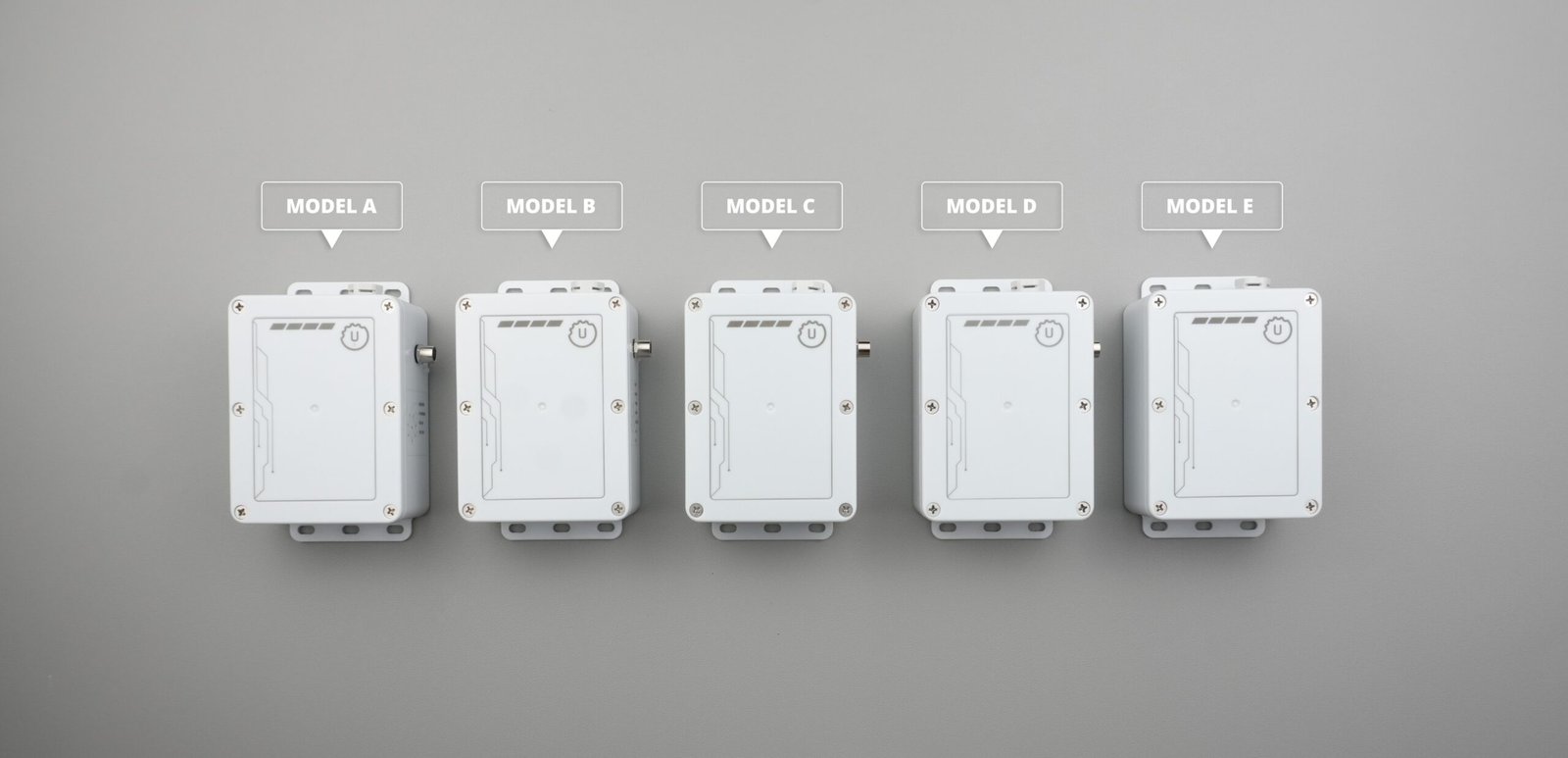
NORVI EC-M12: compact cellular borehole logger
Battery-powered and sealed for remote groundwater wells, with a long-life power profile, internal antenna, and support for NB-IoT, 2G and 4G depending on your region.
Check all variantsWho monitors groundwater this way
Water utilities & municipalities
Wellfield levels, drawdown, recovery, and abstraction management across dispersed sites. For wider utility applications, explore our water and wastewater monitoring system.
Agriculture & irrigation
Borehole levels feeding pumps across large sites, protecting pumps from dry-running.
Environmental & hydrogeology consultants
Long-term groundwater level records and abstraction-licence reporting.
Mining & construction
Dewatering monitoring and groundwater impact tracking around active sites.
Pump & water-solution suppliers
Adding remote level monitoring as a service around the pumps they already sell.
Why the usual approaches fall short
Manual dip readings
A number once a week or once a month, with no alarms and no trend between visits.
Mains-powered dataloggers
Assume a power supply the borehole simply does not have.
Short-range wireless
Wi-Fi and LoRa point-to-point assume infrastructure that is not there in a remote wellfield.
The system, end to end
A complete borehole monitoring node is four things working together.
Pressure sensor
In or above the borehole, reading the water column.
NORVI EC-M12 logger
Battery-powered and sealed, with the antenna built in, installed at the wellhead.
Cellular link
NB-IoT, 2G, or 4G LTE, depending on the region and site coverage.
Dashboard & alerting
Your own platform, or NORVI's. Data and SMS alerts land where you need them.
Two ways to sense the level, and why it matters for battery life
NORVI supports two hydrostatic sensing options, and the choice affects both cost and how long the node runs.
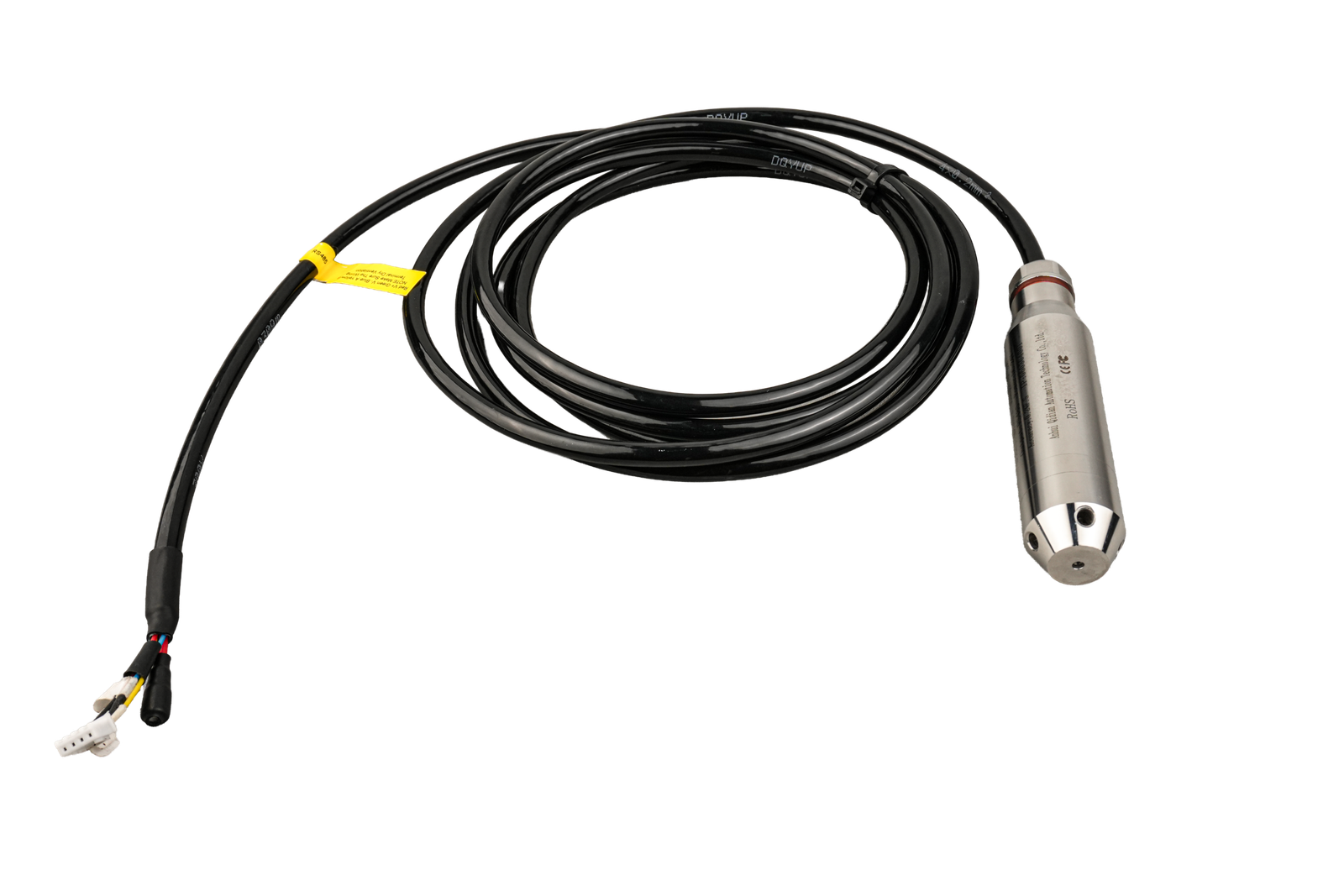
316L stainless-steel submersible sensor
A sealed pressure sensor on a cable, lowered into the water column. Because 316L stainless is well suited to long-term borehole and groundwater immersion, this is the right choice in many installations.
Expected battery life in the field: around 2 years.
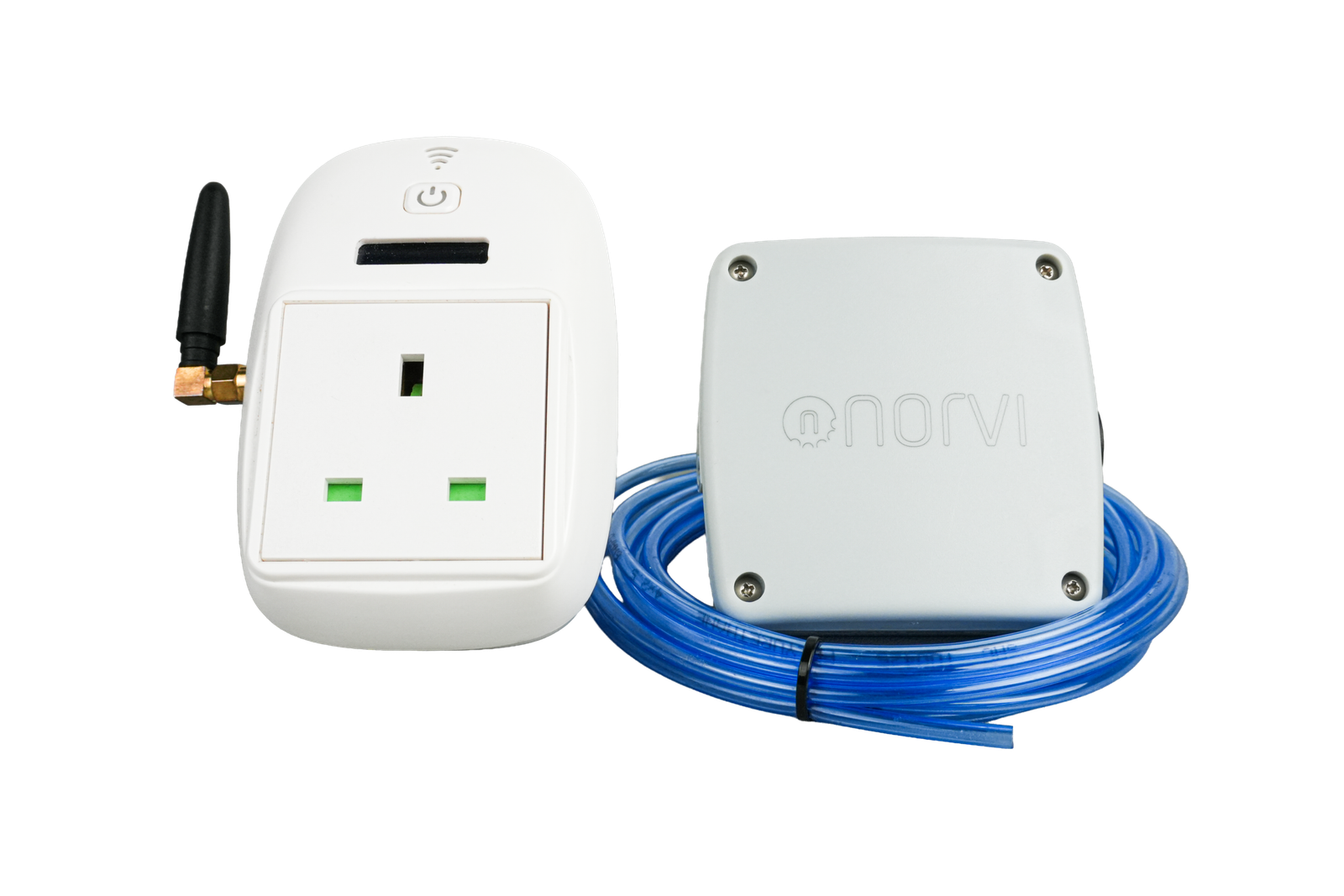
NORVI tube-type sensor
Developed specifically for borehole use, the sensing head stays accessible at the wellhead and reads the water column through a tube run into the borehole. Since the head stays out of the water, the node ends up more cost-effective and longer-lived.
Deployments are running 3+ years and counting.
Both are sized to the borehole depth. Sensor range is matched to the maximum water column, so an 80 m borehole, for example, is well served by a 6 bar sensor.
How the battery lasts years, not months
Battery life is the number that decides whether remote monitoring is worth it. A node that needs a battery swap every six months is a node nobody wants across a wellfield.
Smart logging that saves power
NORVI reaches multi-year life through how the device logs and transmits, not just the battery size:
- Internal datalogging at a fast interval, so nothing is missed on the record.
- Transmit-on-change: the node sends when the level moves meaningfully (plus a regular heartbeat), instead of burning energy on a radio transmission every single reading.
- Change-detection logic that can log faster when something is happening and stay quiet when the level is stable.
Transmit
Transmit
Transmit
Transmit
Transmit
Every wake-up reads the sensor. The node only transmits when the reading has changed. Otherwise it skips the radio and goes back to sleep, saving battery on every quiet hour.
Real-world battery performance
For example, an 80 m borehole deployment runs on a 6 bar sensor at 10-minute logging and has held over two years of battery life and counting. With the tube-type sensor, deployments extend past three years.
However, there's an honest caveat: cellular coverage is a real factor. A node reaching for a weak signal transmits harder and lasts less long than one under good coverage, which is why choosing the right cellular technology for the site matters.
| Sensor option | Typical battery life* | Best for |
|---|---|---|
| NORVI tube-type sensor | 3+ years (and counting) | Lowest cost per node, longest service life |
| 316L submersible sensor | ~2 years | Established approach, direct immersion |
*At 10-minute internal logging with transmit-on-change; varies with cellular coverage and transmit frequency.
Choosing the cellular technology: NB-IoT, 2G, or 4G LTE
There is no single right radio for every region, since coverage and supported bands differ from country to country. Because of this, NORVI ships borehole loggers in several variants so the device matches the site.
NB-IoT with 2G fallback Recommended default
Low power, deep coverage into hard-to-reach sites, with 2G as a safety net where NB-IoT is patchy.
4G LTE
Available where it is the practical choice, with the honest trade-off that LTE draws more power and shortens battery life relative to NB-IoT.
2G
Still the pragmatic answer in some markets, where NB-IoT and LTE coverage remain limited.
The feature that turns data into action
Continuous data is useful; being told the moment something is wrong is critical. Because the cellular modems support SMS directly, a NORVI borehole node can alert without depending on any cloud service being online.
In addition, the device runs an internal alerting engine that watches the level, detects change, and compares against thresholds. As a result, it can raise a low-water-level alarm, a rapid-drawdown warning, or a recovery notification, and send it by SMS to the people who need it.
Alerting logic lives on the device, not only in the dashboard.
Dashboard and data
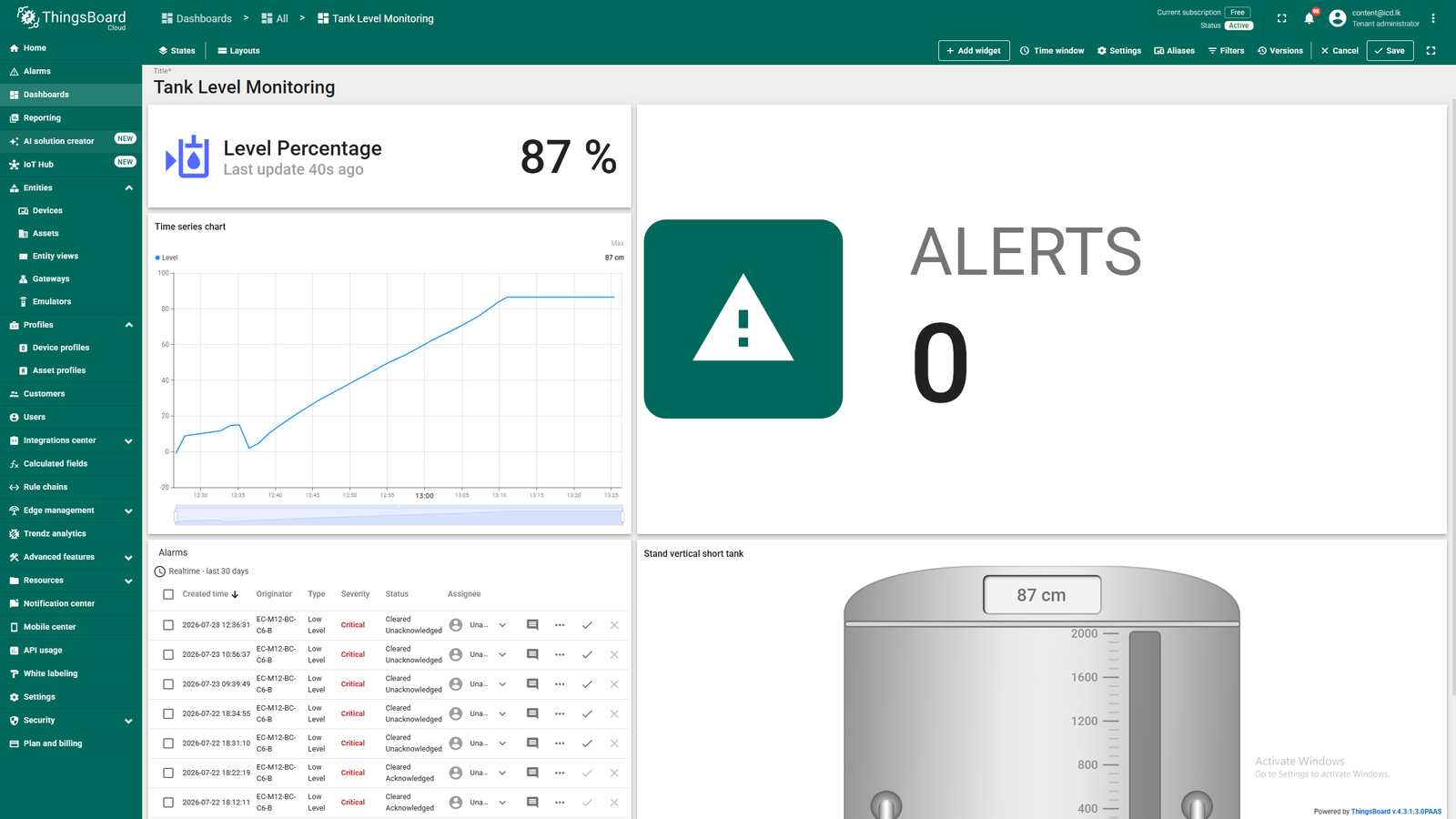
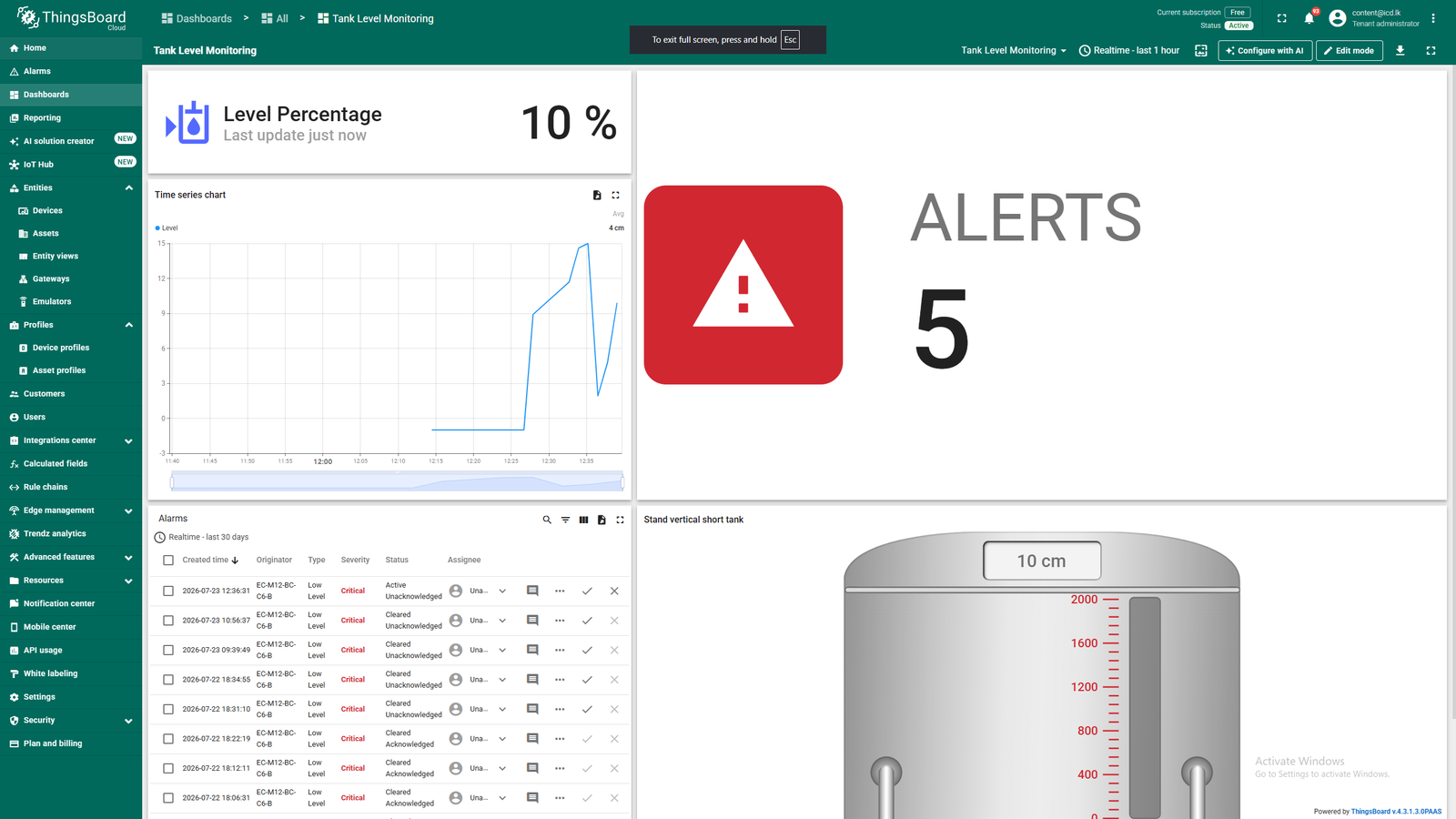
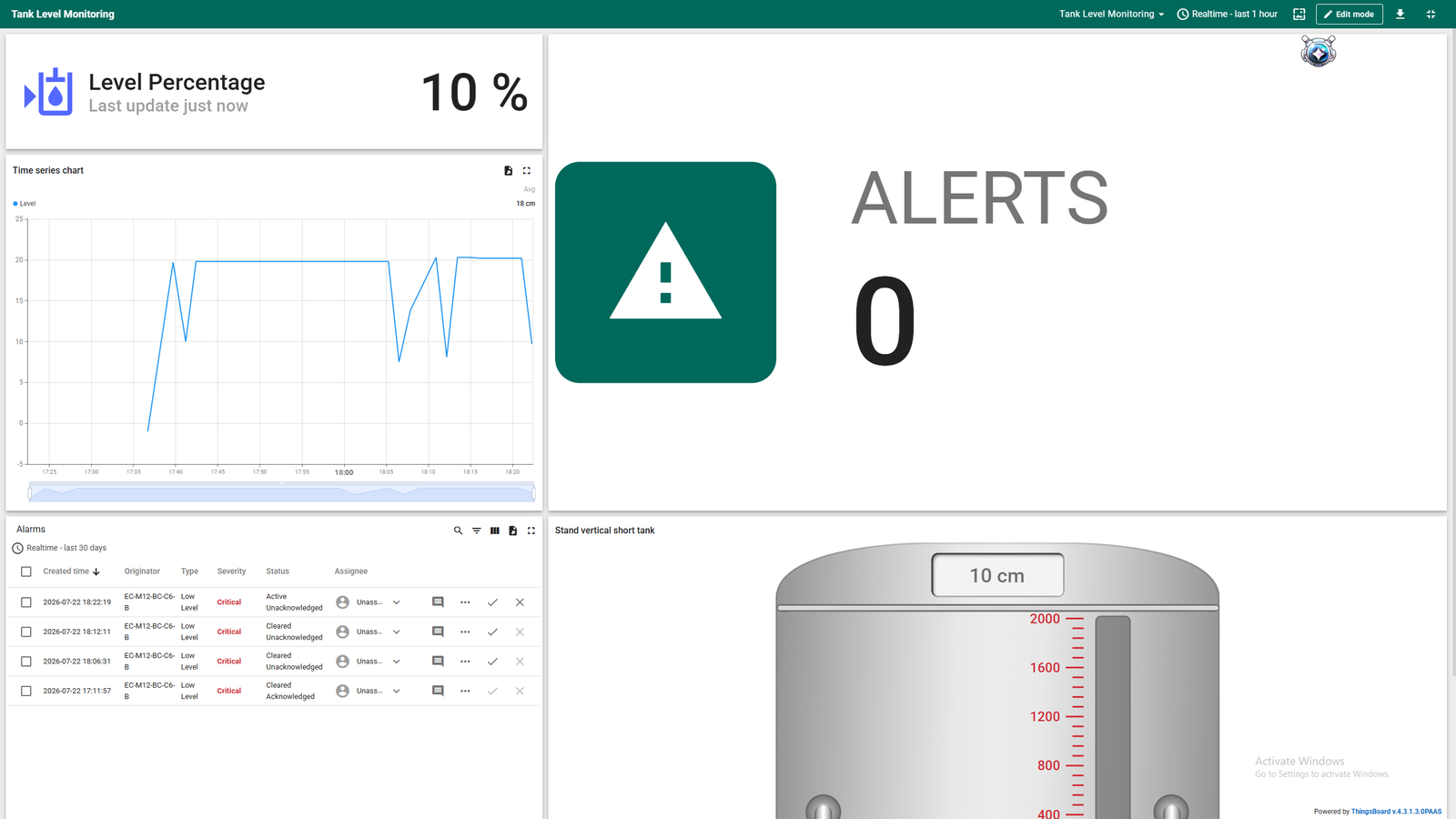
Level trends, drawdown and recovery, and threshold alarms are all visible on the dashboard, with data export for reporting and licence compliance.
Built for system integrators, with no lock-in
NORVI borehole hardware is designed to sit under your solution, not to trap you in ours.
Use any platform
Configure the device to send data to your own platform, or use NORVI's platform to manage nodes and receive data. Either way, there's no lock-in, since it's fully configurable.
White-label
Integrators deliver the solution under their own brand.
Integrate into SCADA
The node fits into a larger SCADA or monitoring system as one more data source.
Add it to what you already sell
Pump suppliers and water-solution providers add remote level monitoring as a value-add around their existing offering.
Overall, this is why borehole monitoring is a natural fit for system integrators: the hardware is proven and self-contained, and everything above the device is yours to control.
Certification and compliance
NORVI borehole loggers carry CE marking and the cellular/radio type-approvals required of a cellular IoT device. The submersible sensor uses 316L stainless steel, suitable for borehole and groundwater immersion.
As a result, these pre-approvals make it easier for system integrators to clear local type-approval (for example, a national TRA process) when deploying in their own market.
Common Questions
Can’t find what you’re looking for? Our team is available for a free technical consultation.
How does a battery-powered borehole monitoring system work?
A hydrostatic pressure sensor measures the water column, the NORVI EC-M12 logs the reading, and the device sends data over NB-IoT, 2G, or 4G LTE to a cloud dashboard. Because the logger is battery-powered, the site does not need mains power or a wired network.
How long does the NORVI EC-M12 battery last in a borehole installation?
Typical field life is around 2 years with a 316L stainless-steel submersible sensor and 3+ years with the NORVI tube-type sensor. Actual battery life varies with cellular coverage, logging behaviour, and how often the device transmits.
Which groundwater level sensor should I use?
The NORVI tube-type sensor is recommended for most deployments because it keeps the sensing head accessible at the wellhead and supports longer service life. A 316L stainless-steel submersible sensor is the established direct-immersion option when that installation method is preferred.
Should I use NB-IoT, 2G, or 4G LTE for borehole monitoring?
NB-IoT with 2G fallback is the recommended default where supported because it is designed for low-power, hard-to-reach deployments. 4G LTE or 2G can be selected when local network coverage and supported bands make them the better choice.
Does weak cellular coverage affect battery life?
Yes. A device working with a weak signal can use more energy during transmission, which can reduce battery life. Matching the cellular technology and device variant to the deployment region and site conditions helps minimise that impact.
Can I use my own dashboard, platform, or SCADA system?
Yes. NORVI borehole hardware is configurable for system integrators, so data can be sent to your own platform, integrated into a larger SCADA or monitoring system, or used with NORVI’s platform without locking the deployment to one software stack.
Can the borehole monitor send alerts without relying only on the cloud?
Yes. The device can use its internal alerting logic to detect level changes and threshold conditions, while the cellular modem can send SMS alerts directly. This allows important borehole alarms to be raised without depending only on cloud-side alerting.
Start your borehole monitoring project
Tell us the borehole depth, the country of deployment, and how many nodes you are planning, and we will recommend the sensor option, the cellular variant, and the configuration for your site.
Discuss your borehole monitoring project