
Water & Wastewater Monitoring Data Loggers
Industrial data loggers built for pump stations, reservoirs, sewer networks, and wastewater treatment sites. Log levels, flow, and pressure for years, whether the site has mains power or none at all.
Built for two site types
- No mains power: use the battery-powered EC-M12 for multi-year remote logging.
- Power available: use the NORVI GSM-AE08 when monitoring and relay control are both required.
- Cellular connectivity removes the need to lay communication cable to remote assets.
- RTC-backed local logging preserves readings through temporary network outages.
Remote monitoring for water networks and wastewater assets
In short: NORVI offers two hardware platforms for water and wastewater monitoring. The EC-M12 is a battery-powered, IP67 cellular data logger for sites without mains power (manholes, remote reservoirs, sewer lines). The NORVI GSM-AE08 is a mains-powered ESP32 controller for sites with electricity (pump stations, treatment plants) that adds relay outputs for pump or valve control alongside monitoring. Both log 4-20mA sensor data with timestamps over cellular networks.
Utilities and industrial operators managing water and wastewater infrastructure share the same problem: assets are spread across a wide area, many sites have no mains power, and manual checks are slow and expensive. A technician driving out to read a tank level or check a pump station is a recurring cost that scales with every new site added to the network.
NORVI's data loggers are built to remove that trip. Connect a 4-20mA level, flow, pressure, or quality sensor, and the device logs readings on a set interval, stores them locally, and sends them over the cellular network to your platform of choice. If the site has no power, the EC-M12 keeps logging on battery for years. If the site has power and needs to control equipment as well as monitor it, the GSM-AE08 controller adds relay outputs for that job.
Choose hardware by power availability, not by guesswork
Every water and wastewater site falls into one of two categories: it either has mains power, or it doesn't. NORVI's monitoring architecture is built around that split.
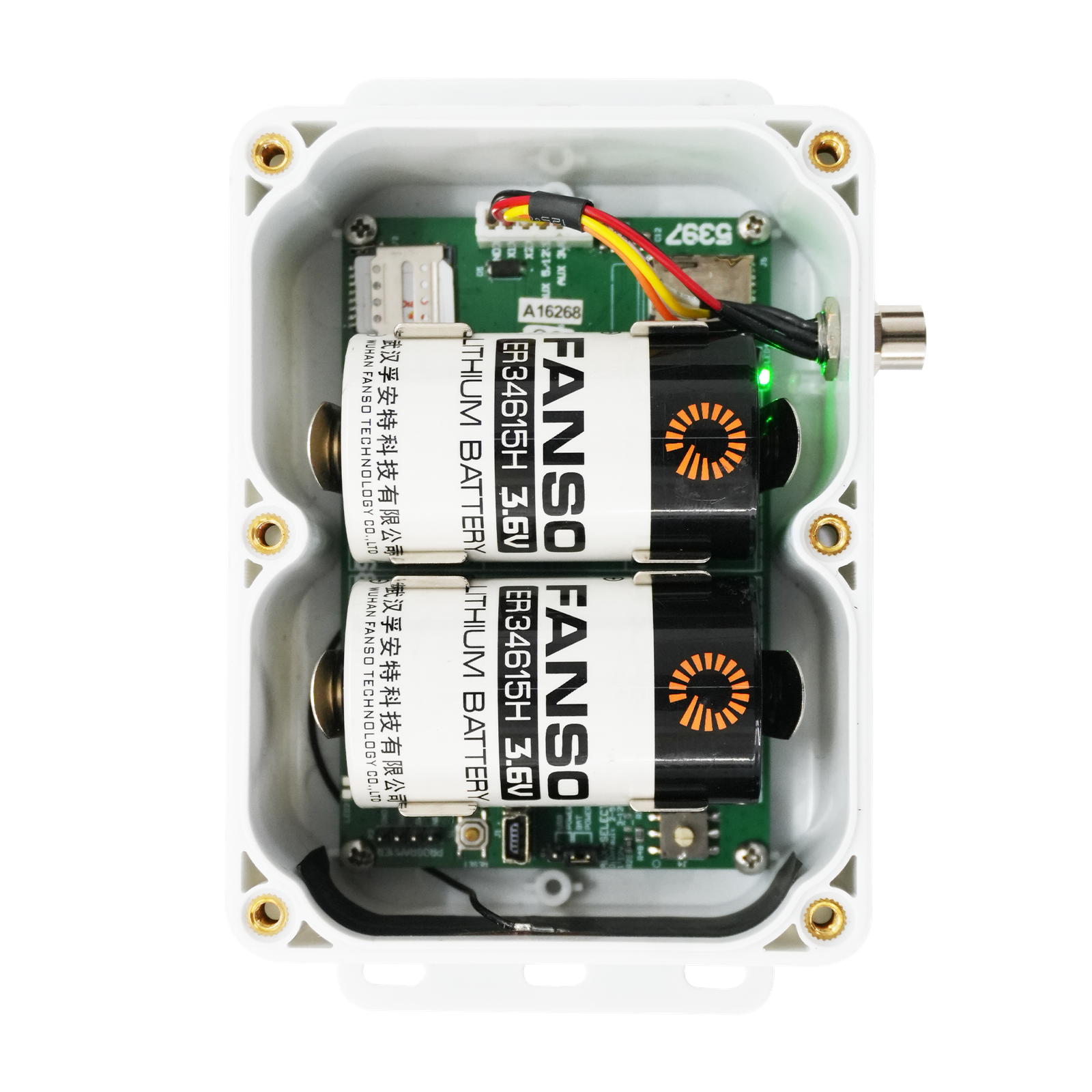
NORVI EC-M12 — Battery-Powered Data Logger
An IP67-rated, battery-powered cellular data logger built for sites with no electrical infrastructure: sewer manholes, remote reservoirs, isolated sections of a water network.
- STM32L072 ultra-low-power microcontroller
- NB-IoT / LTE-M / 2G cellular, with LoRaWAN available as an option
- Dual non-rechargeable lithium batteries rated for 5-7 years of service, depending on reporting interval
- Model-dependent I/O: 4-20mA analog inputs, RS-485, digital inputs, or strain gauge input
- microSD local storage as a backup to cellular transmission
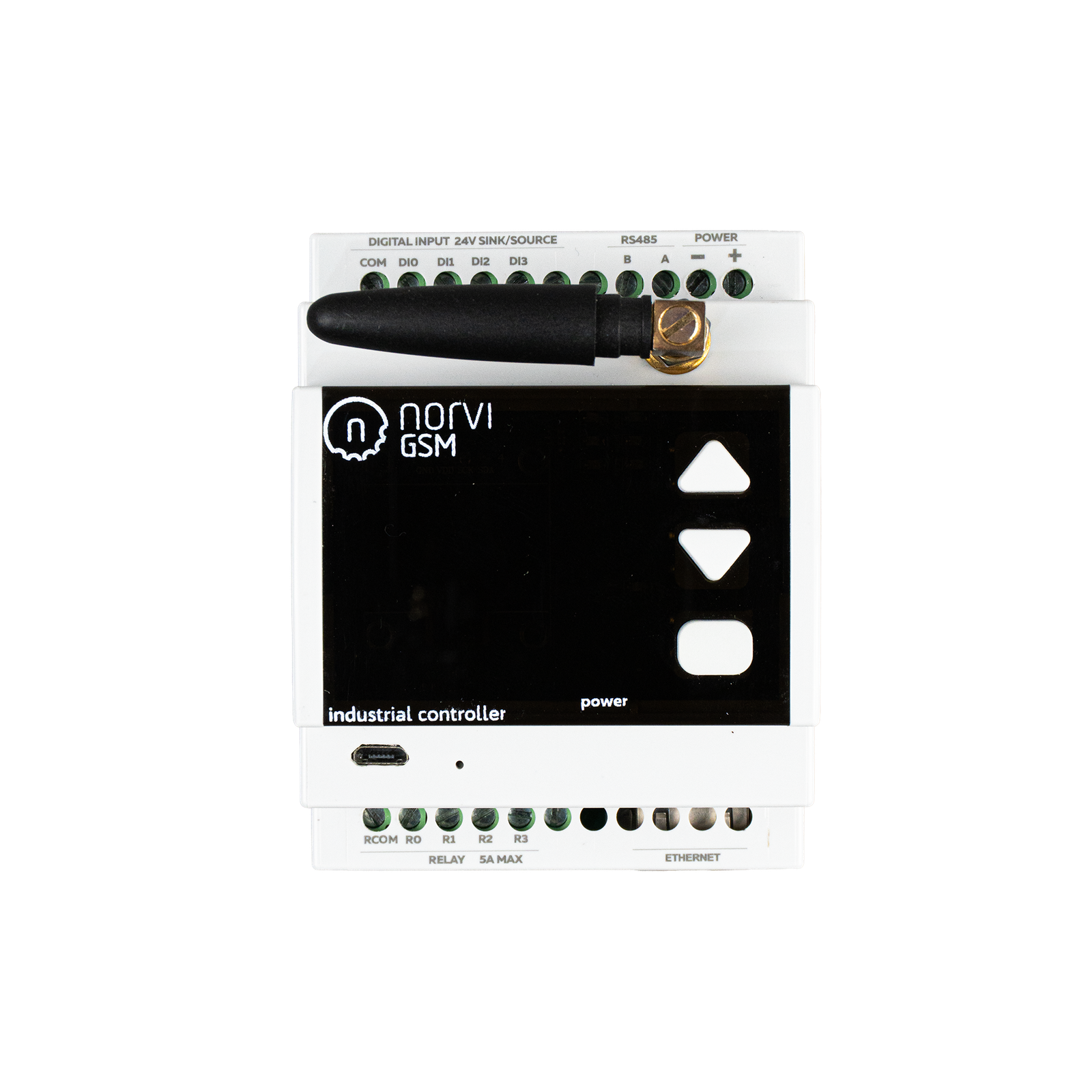
NORVI GSM-AE08 — Cellular Controller
A mains-powered (9-32VDC), DIN-rail mounted ESP32 controller for sites that already have electricity, such as pump stations and treatment plant sub-systems, where control is needed alongside monitoring.
- ESP32-WROOM32 core with built-in GSM (2G) or 4G LTE modem, plus WiFi and Ethernet
- I-series variants add 4x 4-20mA analog inputs for level, flow, and pressure sensors
- Relay or transistor output models for pump start/stop and valve control
- RS-485 Modbus, RTC, microSD logging, and a built-in OLED status display
- Mains-powered, so it does not run on battery — intended for sites with continuous power
Why utilities choose NORVI for water network monitoring
Fewer site visits
Deploy once and receive readings remotely instead of sending a technician to check a gauge.
IP67 build
Sealed enclosures on the EC-M12 handle rain, dust, and submersion-adjacent installs like manholes.
Multi-year battery life
The EC-M12 is rated for 5-7 years on its internal lithium batteries, depending on reporting frequency.
No comms cabling
Both platforms transmit over cellular networks, so there's no trenching for data cable to remote assets.
Local data backup
microSD and RTC-timestamped logging mean readings are preserved even during a signal outage.
Open programming
Both the EC-M12 and GSM-AE08 accept standard Arduino IDE and ESP32/STM32 toolchains, no proprietary lock-in.
Standard interfaces
4-20mA analog and RS-485 Modbus RTU work with common third-party level, flow, pressure, and quality sensors.
In-house manufacturing
NORVI devices are manufactured in-house in Sri Lanka with CE/EMC compliance testing at every assembly stage.
Where each platform fits
Pump Station Monitoring
Pump stations usually have mains power, making the GSM-AE08 I-series a fit for combined monitoring and control: log wet-well level from a 4-20mA transducer, and use relay outputs to start or stop pumps or raise a high-level alarm.
Reservoir & Tank Level Monitoring
Reservoirs and remote storage tanks are frequently sited away from the electrical grid. The EC-M12, paired with a 4-20mA level transmitter, logs tank level on a set interval and reports it over NB-IoT or LTE-M for years without a battery change.
The same hardware also covers boreholes and groundwater wellfields — see the borehole & groundwater level monitoring solution for wellfield-specific sensing and battery-life guidance.
Sewer & Manhole Level Monitoring
Manholes and sewer access points have no power and demand a sealed, submersion-tolerant enclosure. The EC-M12's IP67 rating and battery operation suit this environment, logging level readings to flag surcharge risk before an overflow occurs.
Wastewater Treatment & Compliance Logging
At powered treatment plant sub-systems, the GSM-AE08's RS-485 Modbus and 4-20mA inputs pull readings from flow meters and quality sensors, timestamp them via the onboard RTC, and store them locally for later audit or reporting.
Connecting level, flow, pressure, and quality sensors
Both platforms accept industry-standard sensor interfaces rather than a proprietary connector, so most existing 4-20mA or Modbus RTU instrumentation can be wired in directly.
| Sensor Type | Typical Interface | Compatible NORVI Input | Example Use |
|---|---|---|---|
| Level (submersible hydrostatic, ultrasonic, radar transmitters) | 4-20mA loop-powered | EC-M12 analog input models; GSM-AE08 I-series (4x 4-20mA) | Tank, reservoir, wet-well, and manhole level |
| Flow (electromagnetic, ultrasonic, insertion flow meters) | 4-20mA or RS-485 Modbus RTU | EC-M12 RS-485 / analog models; GSM-AE08 RS-485 port | Influent/effluent flow, network flow metering |
| For water and utility meters with pulse outputs, use pulse counting to record consumption totals and transmit interval data from remote sites. See pulse-output meter monitoring. | |||
| Pressure (line pressure, submersible pressure transducers) | 4-20mA loop-powered | EC-M12 analog input models; GSM-AE08 I-series | Pipeline pressure, pump discharge pressure |
| For treatment filters, differential-pressure transmitters can be used to detect increasing filter restriction and schedule servicing based on actual condition. | |||
| Water Quality (turbidity, pH, conductivity, DO transmitters with 4-20mA or Modbus output) | 4-20mA or RS-485 Modbus RTU | EC-M12 RS-485 / analog models; GSM-AE08 RS-485 port | Treatment plant process monitoring |
| Digital status (float switches, pump run/fault contacts) | Dry contact / digital input | EC-M12 digital input models; GSM-AE08 digital inputs | Pump run confirmation, high-level float alarm |
EC-M12 vs. NORVI GSM-AE08 at a glance
| Specification | EC-M12 (Battery-Powered) | NORVI GSM-AE08 (Mains-Powered) |
|---|---|---|
| Power source | 2 × non-rechargeable lithium batteries (ER34615H type), 5-7 year rated life | 9-32VDC mains/panel supply, continuous power |
| Core processor | STM32L072 (Arm Cortex-M0+, ultra-low-power) | ESP32-WROOM32 (dual-core) |
| Cellular connectivity | NB-IoT / Cat-M1 / 2G (SIM7070 modem); LoRaWAN optional | GSM 2G or 4G LTE (Quectel EC21-G on LTE variants), plus WiFi and Ethernet |
| Enclosure rating | IP67 | DIN-rail industrial enclosure |
| Analog inputs | Up to 2x 4-20mA (model-dependent) | Up to 4x 4-20mA (I-series models) |
| Digital / relay I/O | Digital inputs on select models | Up to 6 digital inputs; relay or transistor outputs for pump/valve control |
| Serial / fieldbus | RS-485 (model-dependent) | RS-485 Modbus |
| Local storage | microSD (up to 256GB) | microSD, plus internal flash |
| Timekeeping | Inbuilt real-time clock | DS3231 RTC with battery backup |
| Typical site type | Manholes, remote reservoirs, unpowered network points | Pump stations, treatment plant sub-systems, powered enclosures |
From sensor to platform, in four steps
Connect the sensor
Wire a 4-20mA, RS-485 Modbus, or digital sensor directly to the logger or controller's terminal block.
Log on interval
The device samples the sensor on a configurable schedule and timestamps each reading with its onboard RTC.
Store & transmit
Readings are buffered to local storage, then sent over the cellular network to your server or IoT platform.
Act on the data
Set thresholds and alerts on your platform, or, on GSM-AE08 sites, trigger a relay output directly from the reading.
Timestamped records for audit and regulatory reporting
Wastewater and water utility operators often need a defensible record of what was measured and when. NORVI's loggers are built with that in mind at the hardware level:
RTC-backed timestamps
Every logged reading is timestamped by an onboard real-time clock, independent of cellular signal availability.
Local, exportable storage
Readings are buffered to microSD or internal flash, so a network outage does not create a gap in the record.
Standard-protocol export
Data reaches your platform over MQTT, HTTP, or Modbus, so it can be pulled into whatever reporting system your utility already uses.
Choose the right model for your site
| Model | Power | Key I/O | Connectivity | Link |
|---|---|---|---|---|
| EC-M12-BC-C6-C-A | Battery (2x lithium) | 2x 4-20mA analog, 12V sensor power | NB-IoT / LTE-M / 2G | Datasheet |
| EC-M12-BC-C6-C-B | Battery (2x lithium) | 1x RS-485, 12V sensor power | NB-IoT / LTE-M / 2G | Datasheet |
| EC-M12-BC-C6-C-D | Battery (2x lithium) | 1x digital input, 2x analog (4-20mA / 0-10V) | NB-IoT / LTE-M / 2G | Datasheet |
| NORVI-GSM-AE08-I-G | Mains (9-32VDC) | 6x digital inputs, 4x 4-20mA analog, RS-485 | GSM 2G + WiFi + Ethernet | Buy Now |
| NORVI-GSM-AE08-I-L | Mains (9-32VDC) | 6x digital inputs, 4x 4-20mA analog, RS-485 | 4G LTE + WiFi + Ethernet | Buy Now |
| NORVI-GSM-AE08-R-G | Mains (9-32VDC) | 4x digital inputs, 4x relay outputs, RS-485 | GSM 2G + WiFi + Ethernet | Buy Now |
Datasheets & Documentation
Common Questions
Can't find what you're looking for? Our team is available for a free technical consultation.
Use the EC-M12. It's a battery-powered, IP67-rated data logger built for sites without mains electricity, such as manholes, remote reservoirs, and boreholes, and is rated for 5-7 years of operation on its internal batteries.
No. The GSM-AE08 is a mains-powered controller that runs on 9-32VDC. It's designed for sites that already have electrical power, like pump stations, where it can also drive relay outputs for pump or valve control.
Both platforms accept standard 4-20mA loop-powered analog sensors and RS-485 Modbus RTU devices, which covers most commercially available level, flow, pressure, and water quality transmitters. Check the specific model's input count and sensor power rating against your sensor's requirements.
Over cellular networks. The EC-M12 uses NB-IoT, LTE-M, or 2G (with LoRaWAN available as an option), while the GSM-AE08 uses GSM 2G or 4G LTE, with WiFi and Ethernet available as alternate paths where those networks exist on site.
Readings are buffered to local storage (microSD or internal flash) with an RTC timestamp, and transmitted once the connection is restored, so a temporary signal loss does not create a gap in the record.
Yes, on relay or transistor output models. It can be programmed to start or stop a pump based on a level or pressure reading, in addition to logging the data. The EC-M12 does not have relay outputs and is intended for monitoring rather than control.
Ready to monitor your water or wastewater network?
Tell us about your site, whether it has power, what sensors you're running, and how many locations you're covering. We'll help you choose the right model.