
The utility sector is under increasing pressure to do more with fewer resources. Aging infrastructure, rising operational costs, water scarcity, stricter environmental regulations, and growing customer expectations have forced utilities to rethink how they monitor and manage critical assets. Traditional inspection methods, where technicians visit remote sites to manually collect readings, are becoming expensive, time-consuming, and increasingly impractical.
This shift has accelerated the adoption of NB-IoT telemetry, a low-power cellular communication technology designed specifically for Industrial IoT applications. Unlike conventional telemetry systems that often rely on proprietary radio networks or wired infrastructure, NB-IoT enables utilities to connect remote assets through existing cellular networks while maintaining exceptionally low power consumption.
For operators responsible for water treatment plants, reservoirs, pumping stations, gas distribution networks, or environmental monitoring stations, NB-IoT offers a practical way to collect reliable field data without continuous site visits. Battery-powered telemetry devices can operate unattended for years while securely transmitting measurements to cloud-based dashboards, enabling faster decisions and reducing maintenance costs.
As digital transformation continues across the utility industry, NB-IoT telemetry is no longer an emerging technology. It has become a proven foundation for modern remote monitoring.
What Is NB-IoT Telemetry?
NB-IoT (Narrowband Internet of Things) is a Low Power Wide Area Network (LPWAN) technology standardized by 3GPP for devices that transmit relatively small amounts of data over long periods. Rather than focusing on high-speed communication, NB-IoT is optimized for reliability, coverage, and energy efficiency.
An NB-IoT telemetry system typically consists of four key components:
- Industrial sensors that measure physical parameters such as pressure, flow, level, or temperature
- A battery-powered cellular IoT data logger that acquires sensor data
- The cellular NB-IoT network used for secure communication
- A cloud platform that stores, visualizes, and analyzes collected information
This architecture allows utilities to monitor distributed infrastructure without deploying expensive communication gateways or maintaining private radio networks.
Unlike Wi-Fi or traditional cellular broadband, NB-IoT is specifically engineered for fixed Industrial IoT devices. The technology provides excellent signal penetration inside buildings, underground chambers, valve pits, and remote rural locations where conventional wireless communication may struggle.
How NB-IoT Telemetry Works
The operating principle behind NB-IoT telemetry is remarkably efficient.
Most remote monitoring applications do not require continuous communication. Instead, the telemetry device remains in an ultra-low-power sleep state for most of its life, waking only when measurements need to be collected.
A typical operating cycle follows these steps:
- The data logger wakes according to a predefined schedule.
- Connected sensors are powered only when required.
- Measurements are collected from analog, digital, or Modbus RTU devices.
- The controller evaluates whether transmission is necessary.
- If configured thresholds are met, the data is securely transmitted over the NB-IoT network.
- Cloud software processes incoming data, updates dashboards, and generates alarms when required.
- The device immediately returns to sleep mode.
Because the cellular modem remains active only for a few seconds during each reporting cycle, overall energy consumption remains extremely low. Depending on reporting frequency, sensor power requirements, and environmental conditions, many battery-powered telemetry devices can operate for several years without maintenance.
For utilities responsible for hundreds or even thousands of monitoring points, this operating model significantly reduces servicing costs while providing continuous visibility into field assets.
Why Utilities Are Replacing Manual Monitoring
For decades, manual meter reading and scheduled inspections were considered standard practice. Although these methods remain common in many regions, they introduce several operational limitations that become increasingly costly as infrastructure expands.
Field technicians must travel to each site, record measurements manually, return to the office, and process collected information before any decisions can be made. Between inspections, operators have little visibility into changing conditions.
The consequences include:
- Delayed leak detection
- Higher labour costs
- Vehicle and fuel expenses
- Human recording errors
- Slow incident response
- Limited operational visibility
Consider a remote reservoir supplying several communities. If water levels begin falling due to an undetected leak, operators may remain unaware until the next scheduled inspection. By then, significant water loss may have already occurred, increasing treatment costs and risking supply interruptions.
An NB-IoT telemetry system fundamentally changes this workflow by replacing periodic inspections with continuous monitoring.
Instead of waiting for technicians to report problems, utilities receive live operational data and automatic notifications whenever abnormal conditions occur.
Key Benefits of NB-IoT Telemetry for Utilities
Low Power Consumption
Power efficiency remains one of NB-IoT’s greatest strengths.
Unlike conventional cellular devices that require continuous connectivity, NB-IoT hardware spends most of its operating life in deep sleep mode. Only brief transmission periods consume significant energy.
For remote installations without mains electricity, this makes battery-powered deployment both practical and economically attractive.
Applications include:
- Borehole monitoring
- Water level monitoring
- Reservoir management
- Environmental monitoring
- Pipeline pressure monitoring
- Remote pump stations
Reliable Cellular Coverage
One of the reasons utilities favour NB-IoT over many alternative LPWAN technologies is its ability to operate within licensed cellular spectrum.
Because mobile network operators already maintain nationwide infrastructure, utilities can deploy monitoring equipment without installing additional communication gateways.
NB-IoT also provides excellent signal penetration through concrete structures, underground chambers, and basement installations, locations that traditionally challenge wireless communication systems.
This combination of reliability and coverage makes NB-IoT particularly suitable for critical infrastructure monitoring.
Lower Total Cost of Ownership
Although installing connected monitoring equipment requires initial investment, the long-term financial benefits are often substantial.
Remote telemetry reduces:
- Manual inspections
- Fuel consumption
- Vehicle wear
- Emergency maintenance
- Unplanned downtime
- Administrative workload
Utilities also benefit from more accurate operational data, allowing maintenance teams to prioritize repairs based on actual asset condition rather than fixed maintenance schedules.
This transition from reactive maintenance to condition-based maintenance is one of the defining characteristics of Industry 4.0.
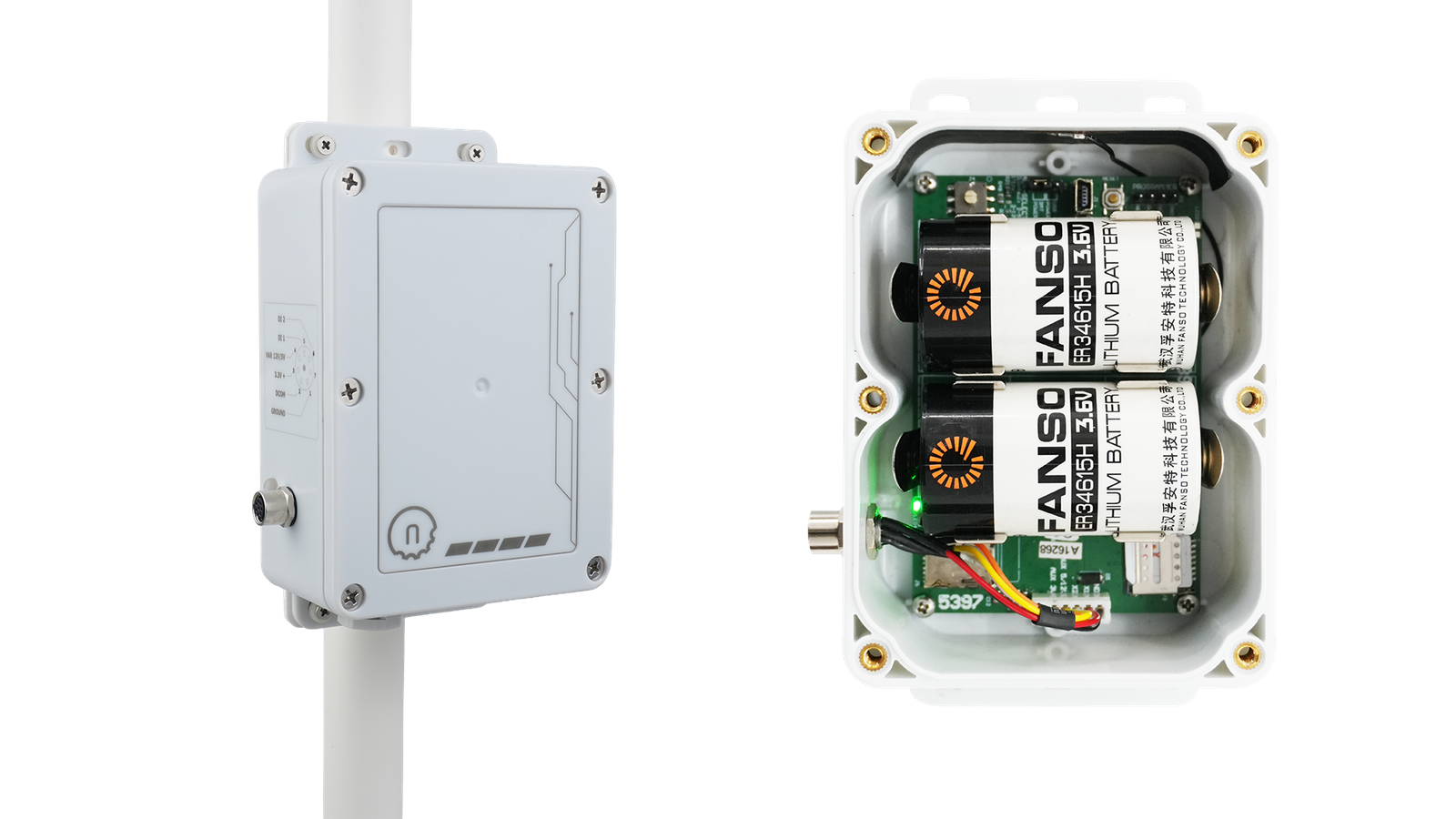
Deploy Utility Telemetry in Minutes with the NORVI Battery-Powered Cellular IoT Data Logger
Looking for a rugged field device for remote utility monitoring? The NORVI EC-M12 Battery-Powered Cellular IoT Data Logger connects directly to industrial sensors and transmits data over NB-IoT, LTE-M, or 2G. With an IP67 enclosure, integrated sensor power, and multi-year battery life, it is ideal for water utilities, reservoirs, boreholes, pipelines, environmental monitoring, and other off-grid telemetry applications.
Real-World Applications of NB-IoT Telemetry
The value of NB-IoT telemetry becomes clear when deployed in real operating environments. Utilities no longer need to rely on scheduled inspections or estimated readings because connected sensors continuously provide accurate operational data. Instead of reacting to failures after they occur, operators gain the ability to identify abnormal conditions early and take corrective action before they develop into costly incidents.
Whether monitoring water infrastructure, gas distribution networks, or environmental assets, the same principle applies. Collect reliable field data, transmit it securely over the cellular network, and transform that data into actionable operational insights.
Smart Water Metering
Water utilities worldwide are replacing manual meter reading with NB-IoT telemetry systems that automatically report consumption data at configurable intervals. Smart metering not only reduces labour costs but also improves billing accuracy and provides customers with greater visibility into their water usage.
Continuous data collection enables utilities to detect unexpected consumption patterns, identify hidden leaks, and respond to abnormal demand much faster than traditional monthly readings. Instead of discovering a leak weeks later during a scheduled inspection, operators receive alerts within minutes or hours, significantly reducing water loss and infrastructure damage.
For municipalities managing thousands of customer connections, automated water metering also simplifies regulatory reporting and long-term demand forecasting.
Water Level and Reservoir Monitoring
Maintaining stable water levels is critical for drinking water distribution, wastewater treatment, irrigation systems, and flood management.
A typical water telemetry solution combines a hydrostatic level sensor with a battery-powered NB-IoT data logger installed inside a weatherproof enclosure. The device periodically measures reservoir levels, borehole depth, tank capacity, or river height before transmitting the information to a cloud dashboard.
Operators can configure alerts for:
- High water level
- Low water level
- Overflow conditions
- Dry-run protection
- Rapid level changes
Because many monitoring locations lack mains power, battery-operated NB-IoT telemetry devices provide a practical alternative to wired monitoring systems.
Pipeline Pressure Monitoring
Pressure monitoring plays an essential role in protecting water distribution networks.
Pressure transmitters installed throughout a pipeline continuously measure operating conditions, allowing utilities to identify pressure drops, burst pipes, blocked sections, or pump failures before customers experience service interruptions.
Historical pressure trends also help engineers optimise pumping schedules, reduce energy consumption, and improve overall network efficiency.
Gas Distribution Monitoring
Gas utilities face similar operational challenges.
Remote regulator stations, pressure reduction points, and pipeline infrastructure require continuous monitoring to maintain safe operation and ensure regulatory compliance.
An NB-IoT telemetry system allows operators to monitor gas pressure, valve status, flow measurements, and environmental conditions without frequent site visits. Real-time alarms enable maintenance teams to respond rapidly whenever abnormal operating conditions are detected.
The combination of long battery life, rugged industrial hardware, and secure cellular communication makes NB-IoT particularly well suited for remote gas infrastructure.
NB-IoT vs LoRaWAN vs LTE-M
Selecting the appropriate communication technology depends on application requirements, deployment scale, and infrastructure availability.
NB-IoT
NB-IoT is designed specifically for fixed Industrial IoT assets that transmit relatively small amounts of data while requiring excellent coverage and long battery life.
It is particularly suitable for:
- Smart water meters
- Reservoir monitoring
- Water level monitoring
- Pipeline pressure monitoring
- Environmental monitoring
- Remote utility telemetry
LoRaWAN
LoRaWAN is another LPWAN technology operating in unlicensed spectrum.
Although it offers excellent range, organisations are responsible for installing and maintaining their own gateway infrastructure. For utilities operating across large geographic regions, this additional infrastructure can increase deployment complexity and maintenance costs.
LTE-M
LTE-M supports higher data rates and mobility, making it suitable for connected vehicles, asset tracking, and mobile equipment.
However, static monitoring applications generally benefit more from NB-IoT because of its lower power consumption and superior underground penetration.
For most fixed utility assets, NB-IoT telemetry provides the best balance between reliability, battery life, operating cost, and nationwide scalability.
Choosing the Right NB-IoT Telemetry Device
Not every Industrial IoT gateway or data logger is designed for harsh outdoor environments. Selecting the right hardware is just as important as choosing the communication technology itself.
When evaluating an NB-IoT telemetry device, consider the following capabilities:
Industrial Sensor Compatibility
The device should support common industrial interfaces, including:
- 4–20 mA analogue inputs
- 0–10 V sensors
- RS485 Modbus RTU
- Digital inputs
- Pulse counters
Supporting multiple sensor types provides flexibility for future expansion while reducing installation complexity.
Low-Power Architecture
Battery life depends on more than battery capacity alone.
Look for hardware designed with ultra-low-power microcontrollers, intelligent sleep modes, configurable reporting intervals, and efficient sensor power management.
These features significantly reduce maintenance requirements while extending deployment life.
Rugged Industrial Construction
Field installations demand hardware capable of operating reliably in challenging environmental conditions.
Industrial telemetry devices should include:
- IP67-rated enclosure
- UV-resistant housing
- Industrial cable glands
- Wide operating temperature range
- Surge protection
- Moisture resistance
Reliable hardware reduces unexpected downtime while protecting long-term investment.
Cloud Connectivity
Modern Industrial IoT deployments require more than simple data transmission.
A complete telemetry solution should support secure cloud connectivity, dashboard visualisation, historical reporting, alarm management, and API integration for existing SCADA or enterprise platforms.
Building the Future of Smart Utilities
Digital transformation within the utility sector is no longer limited to large metropolitan operators. Smaller municipalities, private water companies, agricultural organisations, and industrial facilities are increasingly adopting connected monitoring solutions because the business case has become both practical and economically attractive.
As sensor technology, cloud computing, and Industrial IoT platforms continue to mature, utilities can move beyond simple remote monitoring toward predictive maintenance, automated reporting, and data-driven operational planning.
Artificial intelligence and machine learning will further enhance these systems by identifying subtle operational changes that may indicate equipment wear, developing leaks, or abnormal consumption patterns long before failures occur.
Rather than replacing existing infrastructure, NB-IoT telemetry extends its capabilities by providing continuous visibility into distributed assets.
Conclusion
Modern utilities require accurate information, not assumptions.
By combining industrial sensors, battery-powered cellular data loggers, and secure cloud platforms, NB-IoT telemetry enables operators to monitor critical infrastructure remotely while reducing maintenance costs, improving operational efficiency, and responding to incidents more quickly.
Whether the application involves water level monitoring, smart metering, pipeline pressure measurement, environmental monitoring, or gas distribution, NB-IoT delivers a scalable communication platform capable of supporting long-term digital transformation.
For organisations planning new utility telemetry projects, investing in reliable industrial hardware and standards-based cellular connectivity provides a strong foundation for future smart utility initiatives.
Ready to Modernize Your Utility Monitoring?
Whether you’re monitoring water levels, pressure, flow, or other remote assets, our engineers can help you choose the right Industrial IoT solution for your application.
Frequently Asked Questions
NB-IoT telemetry is a remote monitoring system that uses Narrowband Internet of Things (NB-IoT) cellular technology to collect and transmit sensor data from field devices to cloud platforms for real-time monitoring and analysis.
NB-IoT telemetry is commonly used in water utilities, gas distribution, reservoir monitoring, groundwater monitoring, environmental monitoring, agriculture, smart metering, and Industrial IoT applications.
Battery life depends on reporting frequency, sensor power consumption, network conditions, and battery capacity. Industrial-grade devices designed for low-power operation can often function for several years before requiring battery replacement.
NB-IoT uses licensed cellular networks, offering carrier-grade security, excellent coverage, strong penetration into underground and indoor locations, and reduced infrastructure requirements compared with private LoRaWAN networks.
Most industrial telemetry devices support 4–20 mA transmitters, RS485 Modbus RTU sensors, digital inputs, pulse counters, pressure sensors, flow meters, water level sensors, temperature probes, and other industrial instrumentation.