Physical service visits do not scale
When a firmware change requires a technician, cable and laptop at every site, even a small release can become a scheduling and travel task.

Update firmware on remote ESP32 controllers over cellular networks without relying on site Wi-Fi. Use HTTPS firmware delivery, version checks and controlled release workflows for industrial devices deployed in remote locations.
A USB upload is simple on a workbench. It is not simple when controllers sit in pump stations, OEM machines, energy sites, water assets or customer facilities. Cellular OTA turns firmware delivery into a networked process, but commercial deployments also need recovery logic, release control and confirmation that each device returned to normal operation.
When a firmware change requires a technician, cable and laptop at every site, even a small release can become a scheduling and travel task.
Signal strength, carrier behavior and intermittent connectivity mean the updater must tolerate interrupted transfers and delayed check-ins.
Without remote version reporting, it becomes difficult to know which sites received a fix, which are queued and which need intervention.
HTTPS protects the transfer path, but production designs should also consider trusted firmware, release authorization and downgrade protection.
A successful download is not the same as a successful release. The device should verify the new application and recover if critical checks fail.
Release status, retry state, firmware version and post-boot health should be observable remotely instead of only through a local serial monitor.
A cellular OTA workflow checks a remote version, downloads the firmware binary over HTTPS, writes the update and restarts the controller. For deployed fleets, add release control, device health checks, retry handling and a recovery path.
Build the ESP32 application and assign an explicit firmware version or release channel.
Host the version information and firmware image on a reachable HTTPS endpoint.
The ESP32 reaches the update service through the cellular modem and compares versions.
The device receives the image, writes the OTA application slot and prepares the new version for boot.
Run application checks, report the new version and keep a recovery path if validation fails.
Define how releases are published, which devices receive each version, how update status is reported and how the controller recovers when an update cannot be completed successfully.
Remote firmware delivery reduces the operational effort required to keep distributed controllers current and gives engineering teams better control over software releases in the field.
Apply software fixes and feature releases remotely when physical inspection or wiring work is not required.
Move from scheduling technicians to scheduling releases, with the option to update distributed sites in controlled groups.
Report device firmware remotely so operations can see which assets are current, queued or unable to update.
Use firmware signing, controlled release approval and recovery policies to reduce the risk of untrusted or unsuitable firmware.
Replace local serial observation with remote status events, update errors and post-reboot application confirmation.
Control when large binaries download, avoid unnecessary checks and plan releases around modem and data-plan constraints.
NORVI provides cellular OTA implementation guides for Quectel EC25 and SIMCom SIM7500. Both examples check a remote version on GitHub, download the firmware over HTTPS and apply the update on the ESP32.
The reference checks a remote firmware version, downloads the binary over HTTPS through the Quectel EC25 and applies the update using the ESP32 update process.
The SIM7500 guide follows the same release pattern over cellular using TinyGSM, ArduinoHttpClient, SSLClient and the ESP32 Update library.
NORVI GSM provides fixed-I/O ESP32 cellular controllers, while NORVI X3 provides an ESP32-S3 modular controller with Quectel EC25 LTE Cat 4 connectivity.
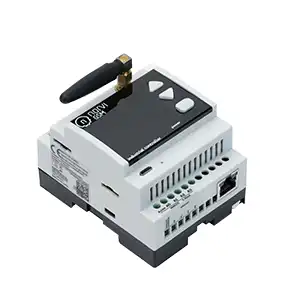
ESP32-WROOM32 industrial controller family with 2G and 4G LTE models, built-in RS-485 and fixed I/O options including relay, transistor, 0-10V and 4-20mA. LTE models are documented with Quectel EC25 or SIMCom SIM7500 modem options depending on the controller variant.
Modular industrial controller based on the ESP32-S3-WROOM-1U-N16R2 with 16 MB flash and 2 MB PSRAM. NORVI X3 includes Quectel EC25 LTE Cat 4, Ethernet, RS-485, Wi-Fi, Bluetooth and support for NORVI X expansion modules.
For applications requiring independent remote firmware management, explore the NORVI XN industrial ESP32 controller, featuring a dedicated OTA Manager for cellular connectivity, firmware updates, and remote diagnostics.
Can't find what you're looking for? Our team is available for a free technical consultation.
NORVI can support device-side OTA firmware, cellular modem integration, remote update-state reporting and deployment validation for ESP32 and ESP32-S3 industrial products.
Due to a surge in global demand, our production queue is at full capacity. We will not accelerate production at the expense of quality - every device undergoes full CE / EMC compliance, regardless of order volume.
| Order Quantity | Lead Time | Notes |
|---|---|---|
| Under 10 units | 2-3 wks | Standard processing |
| 10 - 100 units | 4-5 wks | Mid-volume batch |
| Above 100 units | 6+ wks | Contact us for slot |