
The utility industry stands at a crossroads. Traditional meter reading costs utilities thousands of dollars monthly while water losses through undetected leaks drain both resources and revenue. Meanwhile, an NB-IoT telemetry device offers a solution that transforms how we monitor and manage essential utilities.
Over 4.5 billion cellular IoT connections are expected by the end of 2025, with utilities leading this transformation. Moreover, the NB-IoT market specifically reached $10.43 billion in 2025 and continues growing at 31.82% annually. This rapid growth signals a fundamental shift in how utilities operate.
What is NB-IoT Telemetry and Why Does It Matter?
Narrowband Internet of Things (NB-IoT) represents a specialized wireless standard designed specifically for utility applications. Furthermore, this technology operates within existing cellular infrastructure, making deployment both practical and cost-effective.
An NB-IoT telemetry device connects directly to industrial sensors and transmits data over cellular networks. Unlike traditional systems, these devices require minimal power and can operate for years on battery alone. Consequently, utilities can monitor remote assets without constant maintenance visits.
How NB-IoT Works for Utility Monitoring
The technology uses a narrow 180 kHz bandwidth, which enables deep penetration through thick walls and underground locations. Additionally, NB-IoT operates in three deployment modes:
Standalone mode utilizes dedicated spectrum, often repurposed from older GSM networks. This approach works well when cellular services are being decommissioned.
Guard band mode leverages unused space within LTE carriers. In this case, NB-IoT coexists with existing services without requiring additional spectrum.
In-band mode operates within normal LTE carriers, representing the most common deployment. Specifically, 57.6% of the market uses this approach because it maximizes existing infrastructure.
The Real Cost of Traditional Meter Reading
Water utilities face staggering expenses with manual meter reading. Indeed, one utility reduced costs by 95 cents per meter after automation, saving $181,000 monthly. Beyond direct costs, however, lie hidden expenses that drain utility budgets.
Manual Reading Challenges
Field crews spend hours driving to remote locations each month. Subsequently, vehicles require maintenance, fuel costs accumulate, and scheduling becomes increasingly complex. Meanwhile, approximately 78% of U.S. water utilities still lack automated meter reading systems.
Human error compounds these problems. Technicians inevitably make mistakes during manual data entry. Therefore, billing disputes arise, customer complaints increase, and administrative workloads multiply. Furthermore, traditional methods only catch leaks after thousands of gallons have already been wasted.
The Hidden Expense of Water Loss
American cities lose 20 to 30 percent of water production through undetected leaks. Older systems can lose up to half their drinking water before reaching consumers. Consequently, utilities lose both water and revenue while infrastructure continues deteriorating.
A single running toilet wastes over 100,000 gallons annually. Meanwhile, utilities lack real-time data to identify these problems quickly. As a result, customers receive unexpectedly high bills and blame the utility company.
Why Choose NB-IoT Telemetry for Utilities
The NB-IoT telemetry device addresses these challenges through several key advantages. First, battery life extends up to 10 years, eliminating frequent maintenance visits. Additionally, devices operate reliably in harsh outdoor environments rated IP67.
Superior Coverage and Penetration
NB-IoT signals penetrate deep indoors and underground locations where other technologies fail. This capability proves essential for basement meters and underground infrastructure. Moreover, utilities can monitor assets in rural areas without dedicated network infrastructure.
The technology provides enhanced coverage compared to other LPWAN options. Specifically, NB-IoT reaches areas where traditional cellular signals struggle. Therefore, utilities achieve reliable connectivity across their entire service territory.
Cost-Effective Implementation
Unlike proprietary systems, NB-IoT leverages existing cellular networks. Consequently, utilities avoid expensive infrastructure investments in towers and relay equipment. Furthermore, device costs continue declining as module prices drop below $3.00.
The economics become compelling at scale. Utilities eliminate manual reading costs while gaining real-time visibility into consumption patterns. Additionally, early leak detection prevents costly emergency repairs and water loss.
Real-World Applications: From Water to Gas
Energy and utilities captured 28.7% of NB-IoT revenue in 2024. Meanwhile, over 10 million smart meters using NB-IoT were deployed by 2024. These numbers demonstrate proven, practical applications across utility sectors.
Smart Water Metering
Water utilities use NB-IoT telemetry devices to monitor consumption automatically. The system collects readings daily or even hourly, providing unprecedented visibility. Consequently, utilities identify leaks immediately rather than weeks later during the next manual reading.
Real-time alerts notify utilities when consumption patterns indicate problems. For example, continuous overnight flow suggests a leak requiring immediate attention. Thames Water, serving 15 million customers, deployed NB-IoT metering and customers reduced consumption by 13% after seeing their usage data.
Gas Distribution Monitoring
Gas utilities monitor pipeline pressure and detect potential leaks through remote telemetry. These applications require reliable, long-term operation in hazardous environments. Therefore, the 10-year battery life and rugged design prove essential.
Remote monitoring enables utilities to optimize distribution networks and prevent dangerous situations. Additionally, custody transfer metering ensures accurate billing for industrial customers. Subsequently, utilities reduce operational costs while improving safety.
Environmental and Agricultural Applications
Beyond traditional utilities, NB-IoT enables environmental monitoring in remote locations. Sensors track air quality, water levels, and soil moisture without electrical infrastructure. Furthermore, these applications benefit from the technology’s low power consumption and long range.
Precision agriculture uses telemetry for irrigation control and environmental sensing. Farmers optimize water usage based on real-time data rather than schedules. Consequently, resources are conserved while crop yields improve.
Comparing NB-IoT to Other Technologies
Several connectivity options exist for utility monitoring. However, each technology offers different trade-offs in range, power consumption, and cost.
NB-IoT vs LoRaWAN
LoRaWAN operates in unlicensed spectrum, potentially reducing costs. Nevertheless, coverage depends on private gateway networks that utilities must deploy and maintain. In contrast, NB-IoT utilizes existing cellular infrastructure with carrier-grade reliability.
LoRaWAN offers longer range in some scenarios. However, NB-IoT provides superior penetration through buildings and underground. Additionally, cellular networks offer professional support and guaranteed service levels.
NB-IoT vs Cat-M
Cat-M (LTE-M) represents another cellular IoT standard with higher data rates. This technology suits applications requiring more throughput or mobility. However, NB-IoT consumes less power and costs less for static sensors.
For utility metering with infrequent transmissions, NB-IoT proves optimal. The technology was specifically designed for these applications. Meanwhile, Cat-M better serves asset tracking and mobile applications requiring regular updates.
Why Cellular Beats Proprietary Systems
Proprietary wireless systems lock utilities into single vendors. Furthermore, these systems require dedicated infrastructure investments and ongoing maintenance. Conversely, cellular technologies like NB-IoT leverage carrier networks with guaranteed coverage and support.
Standards-based approaches ensure device interoperability and competitive pricing. Additionally, cellular carriers continuously upgrade infrastructure, providing utilities with improving capabilities over time. Therefore, the long-term total cost of ownership favors cellular solutions.
Technical Specifications That Matter
An effective NB-IoT telemetry device requires specific capabilities for utility applications. Understanding these specifications helps utilities select appropriate solutions for their needs.
Sensor Interface Requirements
Industrial sensors typically output 4-20 mA analog signals representing measured values. Consequently, telemetry devices must provide proper interfaces supporting this standard. Additionally, devices should supply excitation voltage to power passive sensors in the field.
The NORVI EC-M12-BC-C6-C-A offers two 4-20 mA inputs with integrated 12V sensor power. This configuration directly connects to pressure transmitters, flow meters, and level sensors without additional equipment. Therefore, deployment becomes simpler and more reliable.
Power Management Essentials
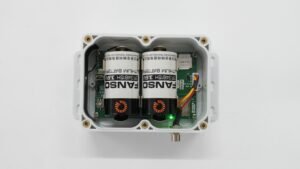
Battery capacity determines maintenance intervals and operational costs. Two 19,000 mAh lithium thionyl chloride batteries provide 38,000 mAh total capacity. Subsequently, devices operate for multiple years without replacement.
Ultra-low-power microcontrollers like the STM32L072 minimize consumption between transmissions. Additionally, cellular modems enter sleep modes to conserve power. The combination enables 10-year battery life under typical utility usage patterns.
Environmental Protection
Outdoor deployments require IP67-rated enclosures protecting against rain, dust, and temperature extremes. Operating ranges from -40°C to +85°C ensure reliability across climates. Moreover, industrial-grade connectors with cable glands provide secure field wiring.
These specifications aren’t merely technical details—they determine whether deployments succeed or fail. Consequently, utilities should prioritize proven, rugged hardware designed specifically for harsh environments.
Implementation: Making the Transition
Deploying an NB-IoT telemetry device requires planning beyond simply purchasing hardware. Utilities must consider integration, training, and change management throughout the organization.
Assessing Your Infrastructure
Begin by evaluating current meter locations and cellular coverage. Most areas have adequate NB-IoT coverage, but remote locations may require testing. Additionally, identify existing sensors that can integrate with new telemetry units.
Consider your data management systems and billing platforms. Modern telemetry solutions integrate with major billing systems through APIs. Therefore, data flows automatically from meters to bills without manual intervention.
Phased Deployment Strategy
Starting with a pilot program reduces risk and builds organizational confidence. Select a manageable area with diverse conditions to test the technology. Subsequently, expand deployment based on lessons learned during the pilot.
Train field staff on new installation procedures and troubleshooting. Although the technology simplifies operations, personnel need familiarity with new equipment. Furthermore, develop procedures for handling edge cases and system maintenance.
Data Management and Analytics
Raw meter readings provide limited value without proper analysis. Implement analytics platforms that identify consumption patterns, detect anomalies, and generate actionable insights. Consequently, utilities transform data into operational improvements.
Customer-facing portals empower consumers to monitor their own usage. Research shows customers reduce consumption by 13% when provided usage visibility. Additionally, transparent data reduces billing disputes and customer complaints.
Security Considerations for Connected Utilities
Connecting critical infrastructure to networks raises legitimate security concerns. However, proper implementation mitigates risks while delivering substantial benefits.
Encryption and Authentication
End-to-end encryption protects data throughout the transmission pipeline. Additionally, device authentication prevents unauthorized access to utility networks. Modern cellular networks provide carrier-grade security by default.
Tamper-proof hardware triggers alerts when physical breaches occur. Therefore, utilities detect attempts to compromise equipment in the field. Furthermore, decentralized data collection through gateways adds additional security layers.
Network Segmentation
Isolate telemetry networks from other utility systems to limit potential exposure. Use virtual private networks (VPNs) for secure connections between field devices and central systems. Additionally, implement access controls restricting who can view sensitive data.
Regular security audits identify vulnerabilities before they become problems. Cellular carriers continually update network security, providing utilities with improving protection over time. Consequently, connected systems can be more secure than isolated legacy infrastructure.
The Future of Utility Monitoring
Technology continues evolving rapidly, opening new possibilities for utility management. Understanding future trends helps utilities make strategic investments today.
Integration with 5G Networks
While NB-IoT serves current needs excellently, 5G networks will expand capabilities further. Enhanced RedCap (eRedCap) technology offers compromise between performance and cost. Moreover, these advancements maintain backward compatibility with existing deployments.
Utilities can begin with NB-IoT knowing their investments remain viable as networks evolve. Cellular standards ensure forward compatibility and migration paths. Therefore, today’s deployments form the foundation for tomorrow’s capabilities.
Artificial Intelligence and Predictive Maintenance
On-device AI inference enables local anomaly detection, reducing network traffic. Telemetry devices can identify unusual patterns and transmit only relevant alerts. Consequently, utilities receive actionable intelligence rather than overwhelming data volumes.
Predictive maintenance uses historical data to forecast equipment failures before they occur. Machine learning identifies patterns indicating impending problems. Subsequently, utilities schedule maintenance proactively rather than responding to emergencies.
Expanding Beyond Basic Monitoring
Current applications focus primarily on consumption measurement. However, integrated sensors enable comprehensive infrastructure monitoring. Water quality sensors, pressure monitoring, and leak detection combine in unified systems.
This holistic approach transforms utilities from reactive service providers to proactive resource managers. Real-time visibility across the entire distribution network enables optimization impossible with traditional methods. Moreover, data-driven decisions improve efficiency while reducing operational costs.
Making the Business Case
Executives need compelling justification for technology investments. Fortunately, the business case for NB-IoT telemetry devices proves straightforward based on quantifiable benefits.
Return on Investment
Manual meter reading costs accumulate quickly. One utility saved $181,000 monthly by eliminating these expenses. Additionally, early leak detection prevents water loss averaging 20-30% of production. These savings alone often justify implementation costs.
Improved billing accuracy reduces disputes and collection costs. Furthermore, customer self-service portals decrease call center volume. The combined operational improvements typically deliver ROI within 2-3 years.
Strategic Advantages
Beyond direct cost savings, connected infrastructure provides competitive advantages. Utilities demonstrate environmental stewardship through resource conservation. Additionally, data transparency builds customer trust and satisfaction.
Regulatory compliance becomes easier with automated reporting capabilities. ESG metrics compile automatically rather than requiring manual data collection. Therefore, utilities meet increasing reporting requirements without additional administrative burden.
Long-Term Value Creation
Connected infrastructure enables services impossible with manual systems. Real-time alerts prevent property damage from leaks, improving customer relationships. Usage insights help customers reduce consumption and bills.
These capabilities position utilities as technology leaders rather than traditional service providers. Subsequently, organizations attract better talent and build stronger community relationships. The transformation extends beyond operational improvements to strategic repositioning.
Getting Started with NB-IoT Telemetry
The path forward begins with education and small-scale testing. Utilities should research available solutions, comparing capabilities against their specific requirements. Additionally, engaging with technology providers provides valuable insights into implementation considerations.
Request pilot programs to evaluate solutions in your actual operating environment. Real-world testing reveals practical considerations that specifications alone cannot address. Furthermore, pilot results provide concrete data supporting broader deployment decisions.
Connect with other utilities who have implemented similar systems. Industry associations and conferences facilitate knowledge sharing and best practice development. Learning from others’ experiences accelerates your own implementation while avoiding common pitfalls.
Conclusion: The Transformation Opportunity
The NB-IoT telemetry device represents more than incremental improvement, it enables fundamental transformation of utility operations. Manual meter reading, estimated bills, and delayed leak detection become relics of the past. Instead, utilities gain real-time visibility, operational efficiency, and customer satisfaction.
The technology has matured beyond early adoption into proven, reliable solutions deployed at massive scale. Over 150 million NB-IoT connections exist globally, with utilities among the largest users. This widespread adoption demonstrates both technical viability and business value.
The question facing utilities isn’t whether to adopt this technology, but when and how. Every day of delay perpetuates inefficient operations and missed opportunities. Meanwhile, forward-thinking utilities are building competitive advantages through connected infrastructure.
The transformation requires investment and effort. However, the alternative – maintaining increasingly obsolete manual systems – carries far greater long-term costs. Utilities that embrace connected telemetry position themselves for success in an increasingly digital, data-driven future.
Start your journey today by exploring available solutions and understanding your specific requirements. The path forward leads through education, pilot testing, and thoughtful implementation. Ultimately, the destination – efficient, sustainable, customer-focused utility operations – justifies the effort required to get there.

 by
by