The Evolution of Industrial Automation
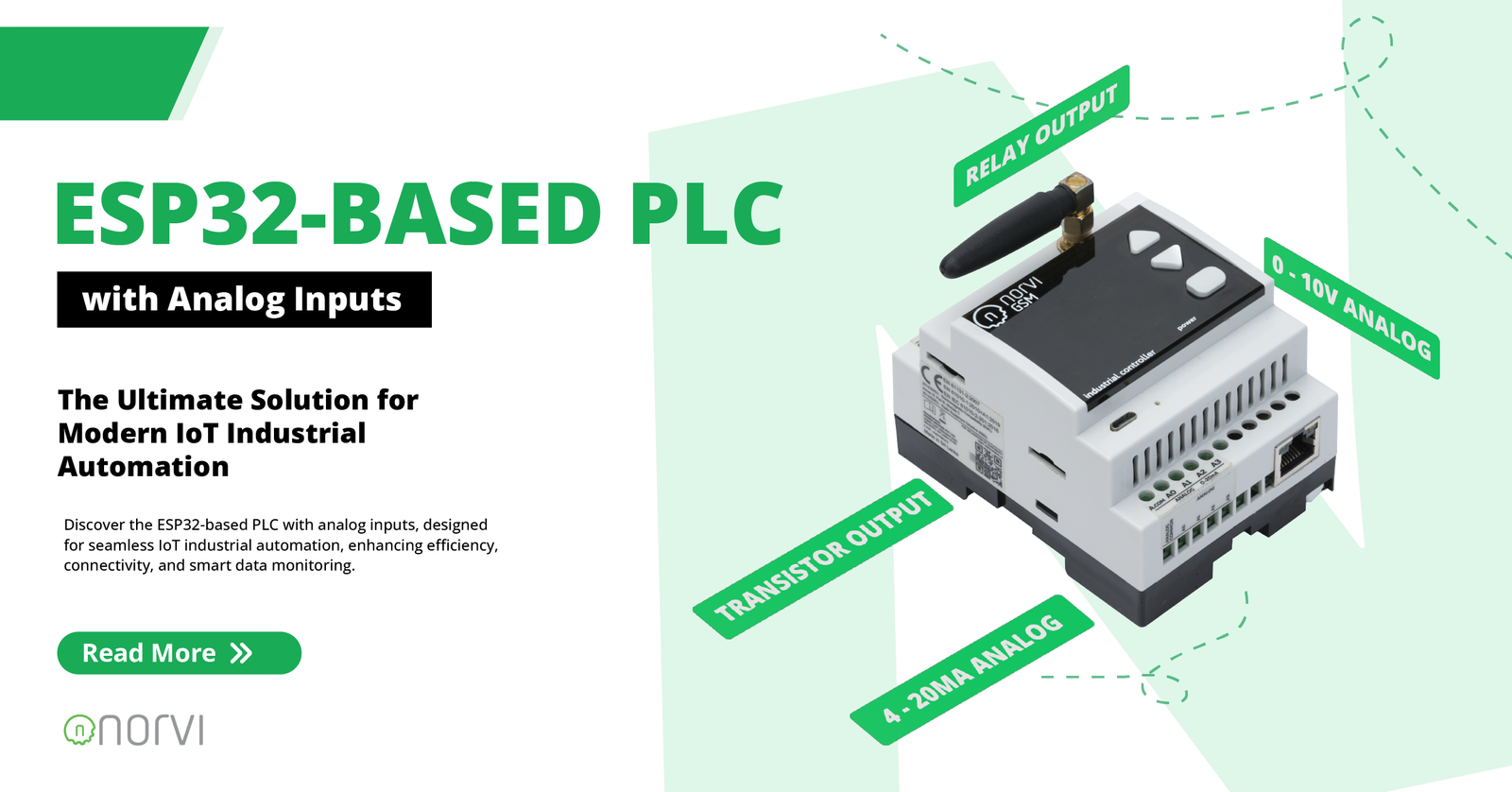
The industrial landscape has undergone a dramatic transformation in recent years, with smart manufacturing and Industry 4.0 principles driving unprecedented demand for intelligent, connected systems. At the heart of this revolution lies the ESP32-based programmable logic controller (PLC) with advanced analog input capabilities, a game-changing technology that bridges the gap between traditional industrial control and modern IoT connectivity.
As manufacturing environments become increasingly complex and data-driven, engineers and system integrators are seeking solutions that combine reliability, flexibility, and cost-effectiveness. The ESP32-based PLC with analog inputs emerges as the ideal answer, offering robust industrial-grade performance while maintaining the versatility needed for diverse automation applications.
Understanding ESP32-Based PLC Architecture
Core Technical Foundation
The ESP32 microcontroller serves as the powerhouse behind modern industrial PLCs, featuring a dual-core Tensilica Xtensa LX6 processor running at up to 240 MHz. This architecture provides exceptional computational power for real-time control applications while maintaining energy efficiency, a crucial consideration in industrial environments where continuous operation is essential.
The dual-core design allows separate management of inputs and outputs, and communications, optimizing performance and ensuring exceptional productivity in dynamic industrial environments. This separation of tasks prevents communication bottlenecks from interfering with critical control functions, a significant advantage in time-sensitive applications.
Advanced ESP32-Based PLC with Analog Input Capabilities
Modern ESP32-based PLCs incorporate sophisticated analog-to-digital conversion systems that far exceed the capabilities of traditional controllers. The ESP32 has 2 x 12-Bit SAR (Successive Approximation Register) ADC hardware peripherals that can read 18 different analog input channels. However, industrial-grade implementations often feature enhanced 16-bit ADC systems for superior measurement accuracy.
The versatility of these systems shines through their support for multiple industry-standard signal types:
0-10V Analog Inputs: Perfect for interfacing with pressure transmitters, flow sensors, and position feedback devices. These voltage-based signals provide excellent noise immunity over moderate distances and are widely adopted in process control applications.
4-20mA Current Loop Inputs: The gold standard for industrial instrumentation, offering superior noise rejection and long-distance transmission capabilities. The 4mA baseline provides a “live zero” that enables fault detection, a critical safety feature in industrial environments.
Precision and Accuracy Considerations
Recent testing shows that ESP32 ADCs achieve better than 3% accuracy on the input range of 0.14 to 2.6 volts, with accuracy improving to better than 1% between 0.21 and 2.53 V. While these specifications are suitable for many applications, industrial ESP32 PLCs often incorporate signal conditioning circuits to optimize performance across the full operating range.
The key to achieving industrial-grade accuracy lies in proper signal conditioning and calibration. Professional ESP32 PLC implementations typically include:
- High-precision voltage references
- Active filtering for noise reduction
- Temperature compensation circuits
- Multi-point calibration capabilities
The IoT Integration Advantage
Seamless Connectivity Options
What sets ESP32-based PLCs (NORVI PLCs) apart from traditional controllers is their native IoT connectivity. The integrated Wi-Fi and Bluetooth capabilities enable direct cloud connectivity without additional hardware, dramatically simplifying system architecture and reducing costs.
Modern implementations support multiple communication protocols simultaneously:
- Wi-Fi for high-bandwidth data transmission
- Bluetooth Low Energy (BLE) for local device configuration
- Ethernet for reliable wired connections
- Cellular connectivity options for remote installations
Real-Time Data Analytics
The combination of analog input precision and cloud connectivity opens new possibilities for predictive maintenance and process optimization. Real-time sensor data can be transmitted to cloud-based analytics platforms, enabling:
- Trend analysis for early fault detection
- Machine learning-based performance optimization
- Remote monitoring and diagnostics
- Automated reporting and compliance tracking
Implementation Strategies and Best Practices
System Design Considerations
When implementing ESP32-based PLCs with analog inputs, several critical factors must be addressed:
Signal Conditioning: The ESP32’s analog inputs can only tolerate up to 3.3V, so voltage divider circuits or dedicated signal conditioning modules are required for higher voltage signals. Professional implementations use isolated signal conditioning to prevent ground loops and ensure system safety.
Noise Mitigation: Industrial environments present significant electromagnetic interference challenges. Proper shielding, grounding techniques, and filtering are essential for maintaining measurement accuracy.
Calibration and Maintenance: Regular calibration ensures continued accuracy over time. Modern ESP32 PLCs often include automated calibration routines that can be triggered remotely.
Programming and Configuration
The flexibility of ESP32-based PLCs extends to programming options. Multiple development environments are supported:
- Arduino IDE for rapid prototyping
- ESP-IDF for advanced applications
- Ladder logic programming for traditional PLC engineers
- Visual programming tools for simplified configuration
This versatility allows organizations to leverage existing skills while gradually adopting new technologies.
Specific Applications and Use Cases
Process Control and Monitoring
ESP32-based PLCs excel in process control applications where analog inputs are critical. Common implementations include:
- Temperature monitoring in chemical processes
- Pressure control in hydraulic systems
- Flow measurement in water treatment facilities
- Level detection in storage tanks
Building Automation
The IoT capabilities of ESP32 PLCs make them ideal for smart building applications:
- HVAC system optimization
- Energy management and monitoring
- Occupancy detection and lighting control
- Security system integration
Manufacturing Quality Control
Real-time analog input monitoring enables sophisticated quality control systems:
- Dimensional measurement and feedback
- Process parameter monitoring
- Statistical process control implementation
- Automated reject handling
Economic Benefits and ROI Considerations
Cost-Effective Implementation
Traditional industrial automation systems often require significant capital investment. ESP32-based PLCs offer compelling economic advantages:
- Lower hardware costs compared to traditional PLCs
- Reduced installation complexity
- Simplified system maintenance
- Scalable architecture that grows with business needs
Operational Efficiency Gains
The combination of precise analog inputs and IoT connectivity delivers measurable operational improvements:
- Reduced downtime through predictive maintenance
- Optimized process parameters for improved efficiency
- Remote monitoring capabilities that reduce service calls
- Data-driven decision making for continuous improvement
Future-Proofing Your Automation Investment
Emerging Technologies Integration
ESP32-based PLCs are well-positioned to incorporate emerging technologies:
- Edge computing capabilities for local AI processing
- 5G connectivity for ultra-low latency applications
- Advanced cybersecurity features for Industry 4.0 compliance
- Integration with digital twin technologies
Scalability and Expansion
The modular nature of ESP32-based systems enables easy expansion as requirements evolve. Furthermore, it is possible to expand the system by adding additional analog input modules, while cloud services can be scaled to manage larger data volumes efficiently.
Embracing the Future of Industrial Automation
ESP32-based PLCs with analog inputs represent more than just an evolutionary step in industrial automation, they embody a fundamental shift toward intelligent, connected systems that can adapt and evolve with changing requirements. The combination of precise analog measurement capabilities, robust processing power, and native IoT connectivity creates unprecedented opportunities for innovation in industrial applications.
By integrating these technologies now, organizations step boldly into the industry 4.0 era, creating systems that not only address today’s needs but are ready to capitalize on tomorrow’s possibilities. The investment in ESP32-based PLC technology pays dividends through improved efficiency, reduced costs, and enhanced capabilities that traditional systems simply cannot match.
As we look toward 2025 and beyond, the integration of artificial intelligence, machine learning, and advanced analytics will further amplify the value proposition of ESP32-based PLCs. Today, we are laying the foundation for the future; indeed, analog input precision and IoT connectivity are shaping the cornerstone of tomorrow’s intelligent industrial systems.
Frequently Asked Questions (FAQ)
While the base ESP32 chip supports up to 18 analog input channels, industrial ESP32 PLCs can be expanded with additional input modules to support dozens of analog signals, depending on the specific product and configuration.
Yes, modern ESP32-based PLCs feature configurable input modules that can handle both voltage and current signals simultaneously, often with automatic signal type detection.
With proper signal conditioning and calibration, industrial ESP32 PLCs can achieve accuracy levels of ±0.1% or better, making them suitable for precision control applications.
When properly designed with industrial-grade components and protection circuits, ESP32-based PLCs can match or exceed the reliability of traditional PLCs while offering superior connectivity and flexibility.
ESP32 PLCs support multiple programming environments including Arduino IDE, ESP-IDF (C/C++), MicroPython, ladder logic, and visual programming tools, making them accessible to engineers with various backgrounds.
Yes, industrial-grade ESP32 PLCs are designed with appropriate protection ratings (IP65/IP67), wide temperature ranges, and robust construction to withstand harsh industrial conditions.

 by
by