

Discover how industrial smart plug with NB-IoT cellular connectivity enable remote power control, energy monitoring, and automation for Industry 4.0. Custom solutions by NORVI.
Introduction: Why Smart Power Control Matters in Industry 4.0
Industry 4.0 automation depends on visibility, control, and connectivity. Furthermore, while sensors and controllers often receive the most attention, power management remains a critical yet overlooked layer. Without intelligent control over how machines and devices consume power, automation strategies remain incomplete.
Specifically, an industrial smart plug with cellular connectivity addresses this gap directly. It enables remote power control, real-time energy monitoring, and autonomous decision-making at the edge. As a result, industrial operations gain measurable efficiency while maintaining reliability and safety. Moreover, these industrial-grade smart plugs integrate seamlessly into existing automation infrastructure.
What Is an Industrial Smart Plug?
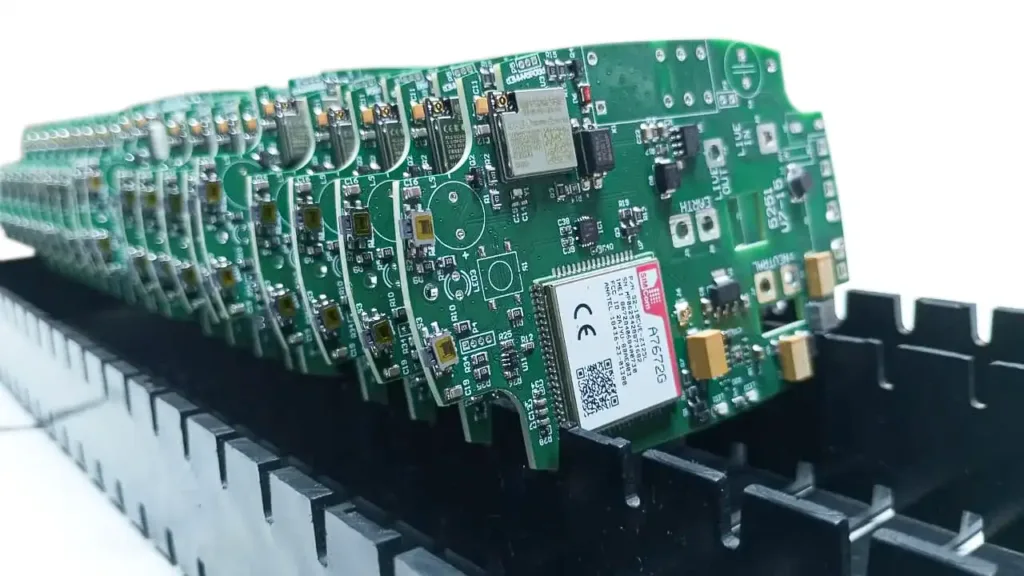
An industrial smart plug is not a consumer-grade IoT socket. Instead, it is a rugged, electrically compliant power interface designed for harsh industrial environments. It allows machines, panels, or auxiliary equipment to be powered, monitored, and controlled remotely.
Unlike basic smart plugs, industrial variants handle higher loads, electrical noise, and continuous operation. Moreover, they integrate directly with industrial automation platforms rather than relying on consumer cloud ecosystems. Consequently, the industrial smart plug operates as a professional-grade component within critical infrastructure.
Industrial Smart Plug vs Consumer Smart Plug: Key Differences
| Feature | Industrial Smart Plug | Consumer Smart Plug |
|---|---|---|
| Load Capacity | 16A-32A continuous | 10A-15A maximum |
| Environmental Rating | IP54-IP67 | IP20-IP44 |
| Connectivity | NB-IoT, WIFI | Wi-Fi, Bluetooth |
| Operating Temperature | -40°C to +85°C | 0°C to +40°C |
| Typical Application | Factories, remote sites, heavy machinery | Homes, small appliances |
Why Industrial Smart Plugs Need Cellular NB-IoT Connectivity
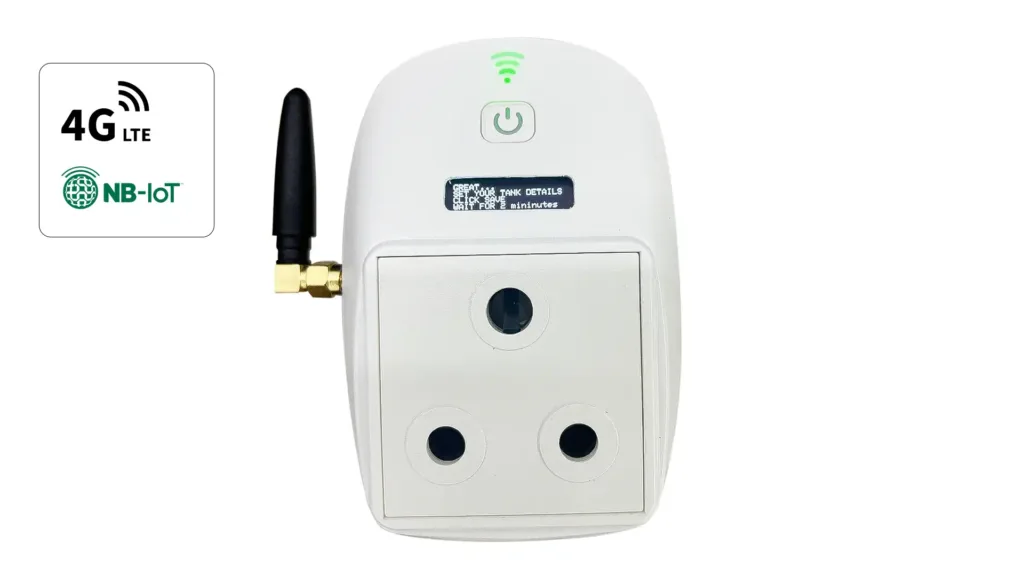
Traditional industrial power monitoring often depends on Ethernet or Wi-Fi networks. However, these options are not always available, especially in remote, mobile, or distributed installations. In contrast, this is where cellular NB-IoT devices become essential for industrial smart plug deployments.
Specifically, NB-IoT offers low power consumption, deep indoor coverage, and reliable long-range connectivity. Consequently, industrial smart plugs can operate independently of local network infrastructure. Furthermore, data transmission remains stable even in basements, substations, or geographically isolated sites.
Because of this, cellular-enabled industrial smart plugs fit naturally into scalable Industry 4.0 deployments. Therefore, organizations can deploy smart power control without expanding existing network infrastructure.
Industrial Smart Plug Use Cases: Power Management & Monitoring
Machinery Power Management
Industrial machines rarely feature intelligent power control built into their design. However, when connected through an industrial smart plug, their power cycles become fully manageable.
Specifically, operators can schedule operating hours, enforce shutdowns during idle periods, and restart equipment remotely. Therefore, unnecessary energy usage decreases while machine availability improves. Moreover, the industrial smart plug prevents equipment from running during non-productive hours.
Energy Consumption Monitoring
Energy data forms the foundation for optimization. An industrial smart plug continuously measures voltage, current, and power consumption in real time.
As this data transmits via NB-IoT, energy usage patterns become visible across sites. As a result, facility managers can identify inefficiencies, compare machines, and support energy audits without manual measurements. Additionally, the industrial smart plugs enables predictive maintenance based on power consumption anomalies.
Remote Power Control and Safe Cut-Off
In industrial environments, the ability to cut power remotely is not just convenient; it is often critical. Industrial smart plugs enable immediate power isolation during fault conditions, maintenance windows, or safety incidents.
Additionally, controlled power shuffle sequences prevent inrush currents and protect sensitive equipment. Hence, operational risk significantly reduces. Furthermore, remote control capabilities minimize the need for on-site interventions in hazardous areas.
Custom Industrial Smart Plug Development by NORVI
NORVI focuses on customized product development rather than off-the-shelf limitations. Specifically, each industrial smart plug solution is engineered around the application, electrical requirements, and deployment constraints.
Instead of adapting industrial processes to generic hardware, NORVI adapts the hardware to real-world industrial needs. This approach ensures compliance, reliability, and long-term scalability. Moreover, custom industrial smart plug development addresses unique voltage requirements, communication protocols, and mounting constraints.
How Custom Development Solves Real Industrial Problems
Industrial applications rarely follow identical requirements. Load ratings, enclosure standards, communication protocols, and data reporting formats vary significantly between deployments.
Through custom development, NORVI integrates cellular NB-IoT modules, industrial-grade power electronics, and firmware tailored to customer workflows. As a result, the industrial smart plugs become a seamless extension of the automation system rather than an external accessory.
Moreover, integration with existing dashboards, cloud platforms, or ERP systems is simplified. Consequently, organizations avoid costly middleware or custom integration projects.
Deployment Scenarios Across Industry 4.0 Applications
Industrial smart plugs with cellular connectivity operate across multiple Industry 4.0 use cases.
Specifically, these deployment scenarios demonstrate practical applications:
- Remote factories without fixed network infrastructure
- Distributed energy monitoring across multiple facilities
- Temporary installations and mobile equipment
- Predictive maintenance strategies based on power behavior
Because NB-IoT supports massive device deployment, scaling from pilot projects to full industrial rollouts remains practical. Therefore, organizations can start small and expand systematically.
Industrial Smart Plugs Benefits for Industry 4.0 Automation
From an Industry 4.0 perspective, the benefits extend beyond basic power control.
Specifically, industrial smart plugs deliver measurable operational advantages:
- Improved operational visibility through real-time energy data
- Reduced downtime via remote diagnostics and resets
- Lower operational costs through optimized energy usage
- Increased safety with remote isolation capabilities
Therefore, the industrial smart plugs evolve into a strategic automation component rather than a simple electrical accessory. Moreover, it provides the data foundation for continuous improvement initiatives.
Frequently Asked Questions About Industrial Smart Plugs
industrial smart plugs feature higher load capacity (16A-32A continuous), ruggedized enclosures (IP54-IP67), wider operating temperatures (-40°C to +85°C), and industrial protocols like NB-IoT, Ethernet, and RS485. In contrast, consumer smart plugs typically handle only 10A-15A and operate in controlled indoor environments.
NB-IoT provides deep indoor penetration, low power consumption, and operates independently of local network infrastructure. Furthermore, NB-IoT remains reliable in remote locations, basements, and substations where Wi-Fi coverage is unavailable or unreliable.
Yes. Custom-developed industrial smart plugs integrate with SCADA systems, cloud platforms, dashboards, and ERP systems through standard protocols like MQTT, Modbus, or REST APIs. Moreover, NORVI designs each industrial smart plug to match specific integration requirements.
An industrial smart plug continuously monitors voltage, current, power consumption (W), energy usage (kWh), power factor, and frequency. Additionally, advanced models detect anomalies, track operating hours, and support predictive maintenance algorithms.
Custom development ensures the industrial smart plugs matches exact load ratings, enclosure requirements, mounting constraints, and communication protocols. Therefore, organizations avoid adaptation costs and achieve faster deployment with higher reliability.
Conclusion: From Simple Plug to Smart Industrial Asset
Industrial smart plugs with cellular connectivity represents a small device with a large impact. When combined with NB-IoT and customized development, it delivers reliable power intelligence directly to Industry 4.0 systems.
NORVI’s approach transforms power points into connected, controllable assets. Consequently, industries gain better control, deeper insights, and stronger foundations for future automation initiatives. Moreover, the industrial smart plug serves as a practical building block that enables immediate ROI while supporting long-term digital transformation strategies.

 by
by