
The ESP32 microcontroller has revolutionized IoT development with its versatility and power. Today, combining ESP32 with LTE technology opens unprecedented possibilities for connected applications. This integration enables developers to deploy reliable, wide-coverage solutions across industries—from remote agriculture to industrial automation. With new modules like the Walter board and advanced SIM modules supporting LTE-M and NB-IoT, ESP32 devices now offer cellular connectivity that rivals traditional wireless options.
Understanding ESP32 LTE Integration
The ESP32, developed by Espressif Systems, features dual-core processing, integrated Wi-Fi, and Bluetooth capabilities. However, traditional Wi-Fi has limitations. It requires local infrastructure and works poorly in remote locations. LTE technology solves these challenges by providing cellular connectivity that works virtually anywhere.
LTE (Long-Term Evolution) delivers high-speed wireless broadband communication. When paired with ESP32 devices, it creates a powerful combination for IoT applications. Moreover, newer technologies like LTE-M (Cat-M1) and NB-IoT (Cat-NB1) specifically target IoT use cases with optimized power consumption and extended coverage.
Latest ESP32 LTE Modules in 2025
The market now offers several advanced ESP32-based industrial controllers with diverse connectivity options:
NORVI Cellular IoT Controller
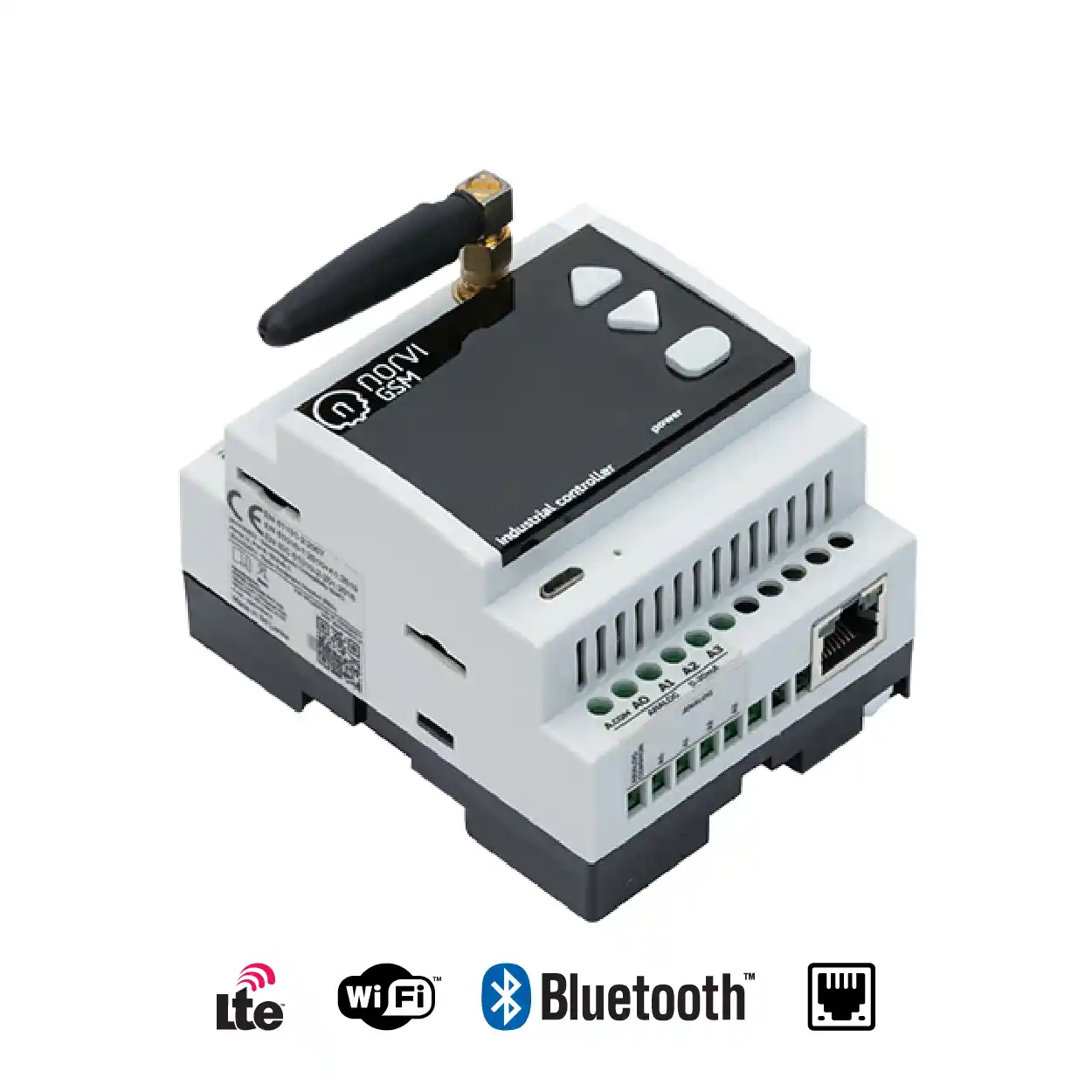
GSM LTE Communication | Built-in OLED Display | microSD Card Support |Ethernet / DS3231 RTC | RELAYS / 0 – 10V / 4 – 20mA
This professional-grade controller combines ESP32 processing with 4G LTE cellular connectivity using the EC21-G modem. It supports worldwide LTE bands including B1/B3/B5/B7/B8/B20/B28, ensuring global compatibility across North America, Europe, Asia, Africa, and Australia. The device features WiFi and Ethernet as backup connectivity options, creating a redundant communication system. It functions as a remote PLC, IoT gateway, data logger, and GSM SMS controller all in one device. With optically isolated inputs, protected relay outputs, wide voltage input (9-32VDC), surge protection, and DIN-rail mounting, it operates in harsh industrial conditions from -10°C to +85°C. Users can control equipment remotely via SMS commands or cellular data connections.
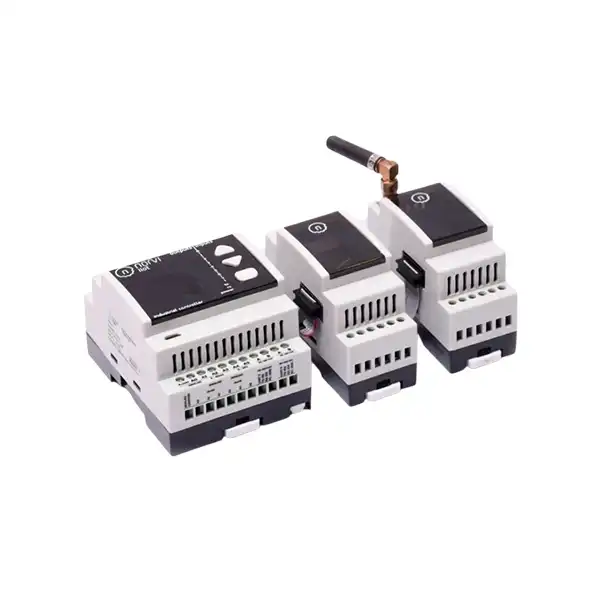
NORVI Expansion Modules extend the functionality of industrial ESP32 controllers with reliable analog, digital, relay, and transistor I/O options. Designed for seamless integration, each module…
Choosing the Right LTE Technology
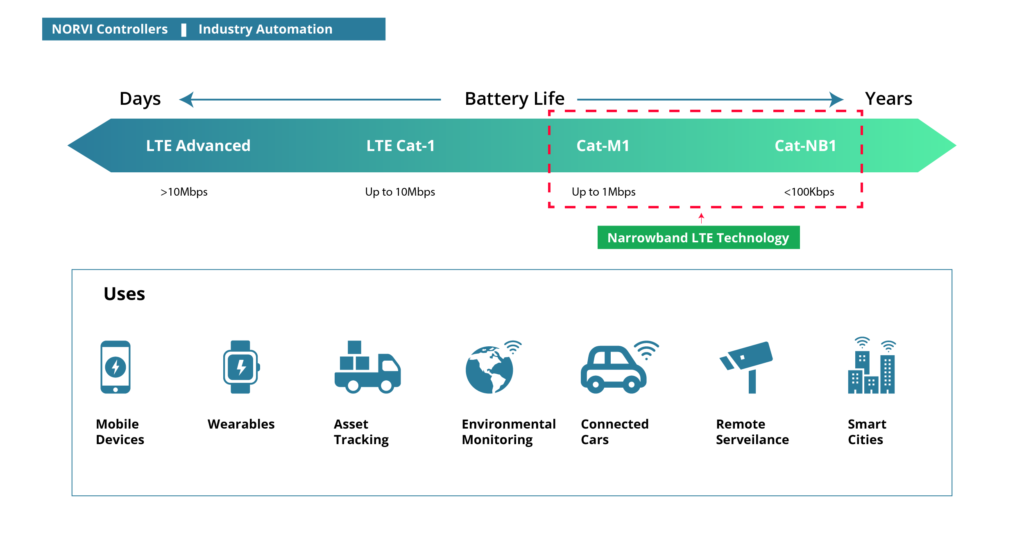
Different LTE categories serve different purposes:
- LTE Cat-1: Offers higher data rates (up to several Mbps) and lower latency (50-100 ms). Best for video streaming, fleet management, and applications requiring voice capabilities.
- LTE Cat-M1 (LTE-M): Balances speed, coverage, and power efficiency. Supports mobility and data rates up to 1 Mbps. Ideal for wearables and mobile sensors.
- NB-IoT (Cat-NB1): Maximizes coverage and minimizes power consumption. Perfect for stationary devices, smart meters, and parking sensors.
Future Outlook
The ESP32 LTE ecosystem continues evolving rapidly. New modules integrate more features while reducing costs and power consumption. As 2G and 3G networks sunset globally, LTE-M and NB-IoT are becoming the standard for IoT connectivity.
5G integration is already beginning, with modules supporting both 4G and emerging 5G networks. This ensures long-term viability for deployed devices. Furthermore, open-source hardware and software reduce development barriers, making cellular IoT accessible to startups and individual developers.
Conclusion
ESP32 devices with LTE technology represent a major advancement in IoT connectivity. They combine the processing power and flexibility of ESP32 with the reliability and global reach of cellular networks. Whether you’re building agricultural sensors, industrial controllers, or smart city infrastructure, ESP32 LTE modules provide the connectivity foundation your project needs.
The latest 2025 offerings deliver unprecedented capabilities at competitive prices. With proper planning and component selection, developers can create robust, scalable IoT solutions that work anywhere in the world. The future of connected devices is here, and it runs on ESP32 with LTE.

 by
by